

Synthetic oil has become the go-to choice for millions of drivers, yet many people still wonder, “What is synthetic oil, and why is it better than regular motor oil?” In simple terms, synthetic oil is an engineered, artificial lubricant designed to protect your engine better than conventional oil. It’s built with highly refined base oils and advanced additives that deliver stronger performance, longer protection, and superior engine cleanliness.
As experts in automotive maintenance, we break down the facts clearly so you can make confident decisions about your car. Whether you’re scheduling an oil change in Houston at a trusted auto repair Houston shop or performing maintenance elsewhere, understanding synthetic oil helps you choose the right product and interval.
In this blog, we’ll explain what synthetic oil is made from, how it differs from regular oil, when you should use it, how long it lasts, and whether mixing synthetic and conventional oil is safe. By the end, you’ll understand exactly why synthetic oil has become the industry gold standard for modern engines.
If you’re searching for ‘auto repair near me,’ we’re here to help — book your service today.
What Is Synthetic Oil Made From?
Synthetic oil starts with highly refined base oils made from Group III, IV, or V oil stocks. These base oils are chemically engineered to have uniform molecules, allowing them to flow better, resist breakdown, and handle extreme temperatures. Manufacturers then add oil additives such as detergents, anti-wear agents, antioxidants, and friction modifiers to boost performance.
These additives help reduce sludge, protect moving parts, and improve oil viscosity across different temperatures. Think of synthetic oil as a “cleaner,” more precise version of regular oil, custom-built for modern engines. It behaves consistently whether you’re driving in freezing winter or sweltering summer heat.
Synthetic vs. Conventional Oil: What’s the Real Difference?
Synthetic oil differs from conventional oil at the molecular level. Conventional oil comes from refined crude oil, which contains natural impurities and inconsistent molecule sizes. Synthetic oil is engineered for purity and consistency, giving it superior stability and performance. These differences reflect long-standing industry findings, including data published by the American Automobile Association in its research report comparing synthetic and conventional oil.
Drivers notice the difference through smoother cold starts, better protection in high-heat conditions, and cleaner engine internals. Synthetic oil also prevents sludge far better than conventional oil, especially in stop-and-go traffic or short-trip driving. If you want longer engine life and fewer maintenance issues, synthetic oil is the stronger choice.
Read Related: Synthetic or Conventional Oil: What’s Best for Your Car?
What Color Is Synthetic Oil?
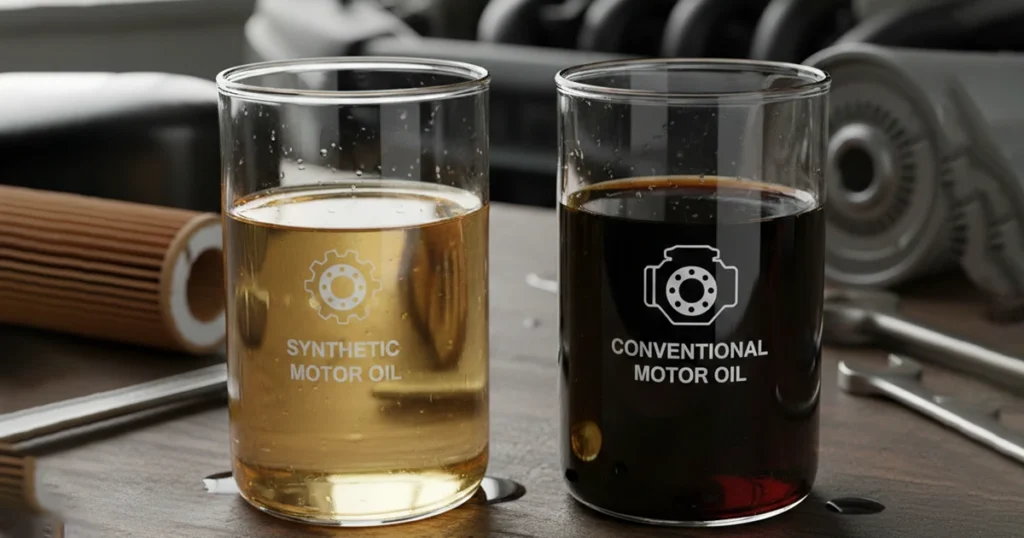
Fresh synthetic oil normally appears amber, light gold, or slightly transparent. The exact synthetic oil color varies based on additives and viscosity, but it generally has a clean, golden look when new.
Darkening over time isn’t always bad. Oil naturally becomes darker as it suspends contaminants and keeps the engine clean. However, if oil turns thick, gritty, or pitch-black early in the cycle, it may be a sign of excessive sludge or overdue maintenance. Checking the oil’s appearance during routine oil changes helps you spot problems early.
Advantages and Disadvantages of Synthetic Oil (Full Breakdown)
Pros of Synthetic Oil
- Provides stronger wear protection at high and low temperatures
- Resists breakdown, oxidation, and sludge formation
- Flows better in cold weather for easier starts
- Helps with engine cooling by carrying heat away from critical parts
- Extends oil change intervals, reducing long-term maintenance
- Improves fuel efficiency and engine cleanliness
Disadvantages of Synthetic Oil
- Costs more upfront than conventional oil
- Older engines with brittle seals may not benefit
- Not always required for low-demand driving conditions
- Some budget vehicles don’t need premium synthetic formulas
Synthetic oil gives clear benefits, especially for modern engines, turbocharged vehicles, and drivers who want fewer repair headaches.
Is Synthetic Oil Worth the Cost?
Yes, synthetic oil is worth the cost for most drivers. While the price per quart is higher, the synthetic oil lifespan is much longer, often lasting 7,500–15,000 miles depending on the vehicle and driving habits.
When you factor in fewer oil changes per year, reduced wear on engine parts, and fewer repair risks, synthetic oil saves money in the long run. It also protects better during extreme temperatures and heavy driving conditions, giving your engine a longer, healthier life.
Can You Mix Synthetic Motor Oil With Regular Oil?
Yes, you can mix synthetic and conventional oil without harming your engine. Modern oils are compatible because they must meet the same industry standards.
However, mixing synthetic and conventional oil dilutes the superior protection of the synthetic blend. It’s safe for emergencies, like topping off on the road, but it shouldn’t replace full synthetic oil changes. For the best performance, stick with one type and follow your manufacturer’s recommendations.
Best Synthetic Motor Oils in 2025
Drivers in the U.S. trust several brands known for consistent performance, engine cleanliness, and durability:
- Mobil 1 Extended Performance: Best overall full synthetic
- Castrol Edge: Ideal for high-performance and turbo engines
- Valvoline Advanced Full Synthetic: Best for daily drivers
- Amsoil Signature Series: Premium long-life protection
- Shell Rotella T6: Best for diesel pickups and heavy-duty needs
These brands offer excellent viscosity stability and long-lasting protection, making them great choices for most vehicles.
How Long Does Synthetic Oil Last?
Most full synthetic oils last between 7,500 and 15,000 miles, depending on your vehicle, driving style, and oil quality. Turbocharged engines, frequent short trips, towing, and extreme climates may shorten the interval.
Always follow your owner’s manual and check your oil every few weeks. If the oil level drops or looks contaminated, schedule an oil change sooner.
Does Synthetic Oil Make a Difference?
Synthetic oil improves performance in measurable ways. It reduces friction between engine parts, improves heat resistance in turbo engines, and maintains viscosity better during long drives. You’ll also notice fewer deposits and smoother acceleration.
Drivers who switch often report better fuel efficiency and fewer maintenance problems. Over the life of a car, synthetic oil can prevent thousands of dollars in wear-related repairs.
Synthetic Oils for Specific Vehicles: Do You Need One?
- High-Mileage Vehicles: High-mileage synthetic oils include conditioners that protect aging seals and reduce oil burn-off.
- Turbocharged Cars: Turbos generate extreme heat full synthetic oil is practically mandatory to prevent coking and wear.
- Hybrids: Hybrids require oils that handle constant engine on/off cycles; synthetics excel here.
- Luxury Cars (Mercedes, BMW, Lexus): Many luxury brands require full synthetic oil to maintain warranty and performance standards.
- Diesel Engines: Heavy-duty diesel formulas like Rotella T6 provide the high-detergent protection diesel engines need.
How to Check If Your Engine Needs Synthetic Oil
Not every vehicle requires synthetic oil, but using it in the right situation can significantly improve engine performance and longevity. Checking a few key factors can help you make the best decision for your car and avoid unnecessary expenses. Use the checklist below to see if your vehicle requires or benefits from synthetic oil:
- Your owner’s manual says “full synthetic required”
- You drive in extreme heat or freezing temperatures
- You own a turbocharged or high-performance engine
- You tow, carry heavy loads, or drive long distances
- You want longer oil change intervals and better long-term reliability
If your car meets any of these conditions, synthetic oil is the smarter choice.
Switch to Synthetic Oil at Eric’s Car Care
Choosing the right motor oil protects your engine, lowers repair costs, and keeps your vehicle running longer. Whether you’re upgrading from conventional oil or sticking with full synthetics, now’s the perfect time to schedule an oil change and give your engine the protection it deserves. If you’re unsure which synthetic oil is best for your vehicle, consult a trusted mechanic or refer to your manufacturer’s recommendations.
At Eric’s Car Care, we provide high-quality synthetic oil options tailored to your vehicle’s needs. Our expert technicians perform precise oil changes that maximize engine performance and longevity. Schedule your visit today and see how synthetic oil can make a real difference for your car. Call us now at 713-844-8261 to book your appointment.