You start your car on the first chilly morning of the season, and a yellow horseshoe-shaped light with an exclamation point appears on your dashboard. A cold weather tire pressure warning is one of the most common alerts drivers see when temperatures drop, even in Houston. Most of the time, it is a simple fix, but sometimes it points to a leak or another problem. If you are not sure what is going on, our team is one of the trusted auto repair shops near me that Houston drivers rely on for quick answers.
In this guide, we explain why cold air lowers tire pressure, how to respond to the warning, and when it is time to have your tires and suspension checked. Schedule a tire pressure check with Eric’s Car Care today.
Why Does Cold Weather Trigger The Tire Pressure Light?
Air contracts when it gets colder. As a general rule, tire pressure drops about 1 PSI for every 10-degree Fahrenheit drop in temperature. If your tires were filled on a warm afternoon and the temperature falls 30 degrees overnight, they could lose around 3 PSI. That can be enough to push them below the threshold that triggers your tire pressure monitoring system, or TPMS.
How Does The TPMS Work?
Since the 2008 model year, passenger vehicles sold in the U.S. have been required to have a TPMS. Most systems use sensors inside each wheel that measure air pressure and send a signal to your dashboard. The warning usually comes on when a tire is about 25 percent below the recommended pressure.
Steady Light Vs. Flashing Light
- Steady light: One or more tires are underinflated.
- Flashing light, then steady: There is usually a problem with the TPMS itself, such as a dead sensor battery.
H2: What Should You Do When The Light Comes On?
1. Check All Four Tires With A Gauge
Use a reliable tire pressure gauge when the tires are cold, ideally before driving or after the car has been parked for a few hours.
2. Find The Correct PSI
Look at the sticker inside the driver’s door jamb or in your owner’s manual. Do not use the maximum pressure printed on the tire sidewall.
3. Add Air As Needed
Fill each tire to the recommended level. Many gas stations around Houston have air pumps, or you can stop by our shop.
4. Drive A Short Distance
The light often turns off after a few miles once the system reads the correct pressure, but some vehicles need a tire pressure light reset to clear it.
5. Watch For The Light To Return
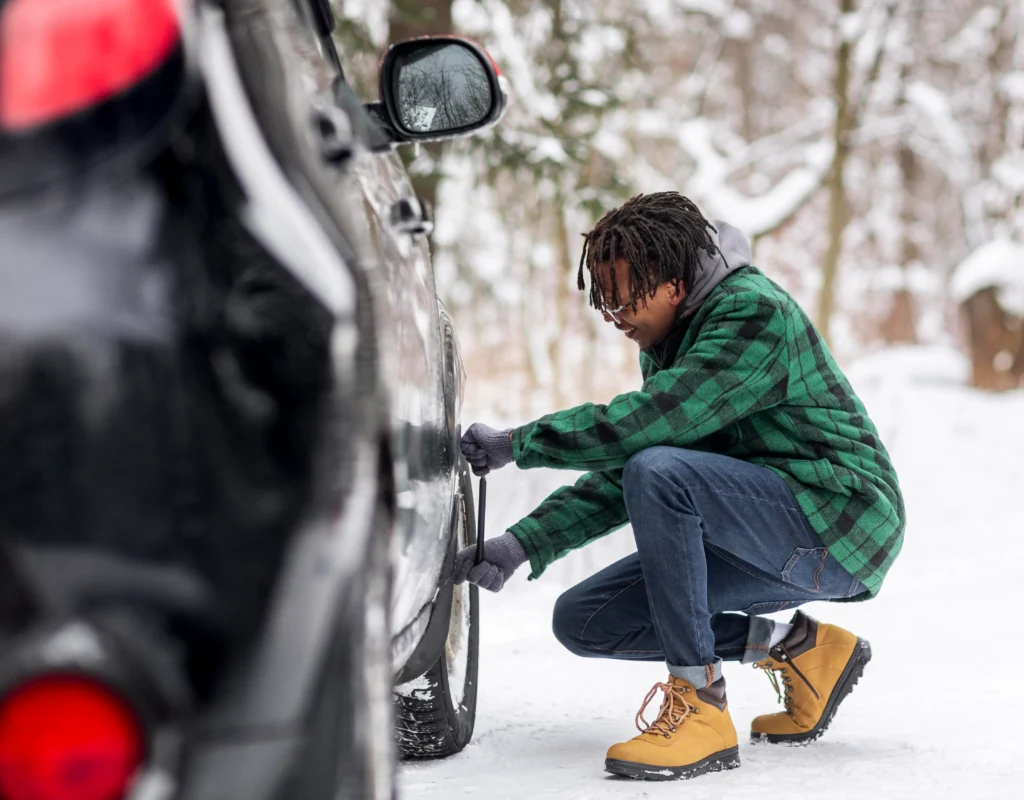
If the warning comes back within a day or two, you may have a slow leak from a nail, a damaged valve stem, or a bent wheel. A completely flat tire may require you to change a flat tire before driving to a shop.
Why Proper Tire Pressure Matters
- Safer handling: Underinflated tires reduce steering response and grip.
- Shorter stopping distances: Properly inflated tires help your brakes work as designed.
- Better fuel economy: Low pressure increases rolling resistance.
- Longer tire life: Low pressure causes uneven wear on the outer edges.
Can Low Tire Pressure Affect Alignment And Suspension?
Yes. Driving on underinflated tires puts extra stress on your suspension components and can lead to uneven wear that feels like a pull to one side. Potholes on Houston streets can also bend wheels and cause bad wheel alignment. If your car feels unstable, bouncy, or pulls after you correct the pressure, a search for auto suspension repair near me is the right next step, so a technician can inspect the shocks, struts, and steering parts.
Tips To Prevent Tire Pressure Problems In Cold Weather
- Check pressure monthly and before long trips.
- Adjust with the seasons: Add air when cooler weather arrives.
- Inspect tires for damage, such as nails, cuts, or bulges, and watch for tire replacement warning signs.
- Replace TPMS sensors when needed: Most batteries last several years.
- Keep up with tire rotations and alignments.
Get Expert Help At Eric’s Car Care
A tire pressure warning is easy to fix most of the time, but a light that keeps returning deserves a closer look. Eric’s Car Care has served Houston drivers for decades, with locations near the Medical Center and Rice Village. Our technicians can inspect your tires, TPMS sensors, alignment, and suspension. If your car pulls or wears tires unevenly, we offer car wheel alignment near me that drivers trust. Contact us today to schedule service!
Key Takeaways
- Cold air lowers tire pressure. Tire pressure drops about 1 PSI for every 10-degree Fahrenheit drop in temperature, which is why the warning often appears on the first chilly morning. Cold weather also affects your car battery.
- A steady light means low pressure. A flashing light that turns steady usually points to a problem with the TPMS itself, such as a dead sensor battery.
- Check tires when they are cold. Use a reliable gauge and fill each tire to the PSI listed on the driver’s door jamb sticker, not the maximum pressure on the sidewall.
- Do not ignore the warning. Severely low tires can overheat, fail, and hurt handling, braking, and fuel economy.
- A returning light signals a bigger issue. If the warning comes back within a day or two, you may have a slow leak, a damaged valve stem, or a bent wheel.
- Low pressure affects your suspension. Underinflated tires and Houston potholes can cause uneven wear and alignment problems, so have your suspension inspected if the car pulls to one side or bounces when you drive.
- Do not overinflate in winter. Always follow the recommended PSI, since overinflated tires reduce traction and wear unevenly.
Frequently Asked Questions
Is It Safe To Drive With The Tire Pressure Light On?
You can usually drive carefully to the nearest air pump, but do not ignore the warning. Severely low tires can overheat or fail. If a tire looks visibly flat or the car pulls hard to one side, stop driving and call for help instead of risking a blowout.
Why Does My Light Turn Off In The Afternoon?
As the day warms up, the air in the tires expands, and the pressure rises above the warning threshold. If the light comes back on the next cold morning, your tires are still running low, so add air to the recommended PSI instead of waiting for the light to stay off.
Should I Overinflate My Tires In Winter?
No. Fill them to the recommended pressure when the tires are cold. Overinflated tires have a smaller contact patch, which reduces traction and causes the center of the tread to wear out faster, so always follow the PSI listed on the driver’s door jamb sticker.