
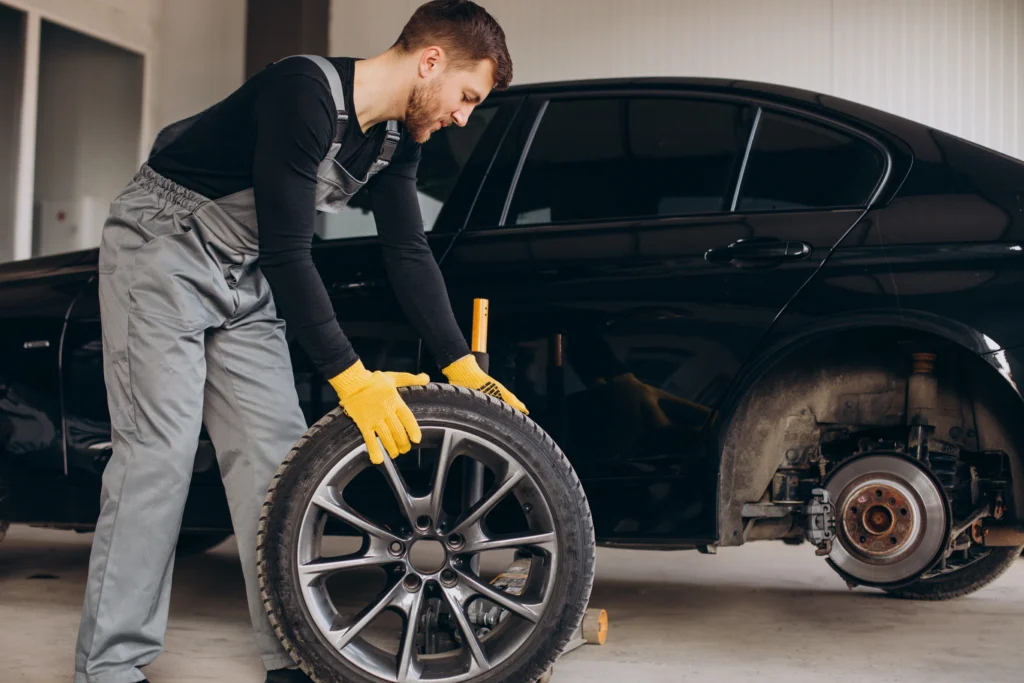
Regular tire maintenance is important for promoting even tread wear, maintaining handling, and helping your tires last longer. Tire rotation involves moving your tires to different positions on the vehicle according to the appropriate rotation pattern.
So, how often should you rotate your tires? A common guideline is every 6,000 to 8,000 miles, but the exact interval should follow your vehicle manufacturer’s recommendations. If you notice uneven tread wear or drive frequently in stop-and-go traffic, on rough roads, or under heavy loads, your tires may require attention sooner. For drivers looking for reliable auto repair Houston services, regular tire maintenance can help identify wear and other issues before they become more serious.
What Is Tire Rotation?
Tire rotation is the process of moving each tire to a different position on your vehicle. The tires may be moved from front to rear, rear to front, or from one side to another depending on the vehicle and tire design.
Tires do not always wear evenly because each position on a vehicle can place different demands on the tire. Front tires, for example, may experience additional steering, braking, and driving forces. Regular rotation helps distribute this wear more evenly across the tire set.
How Often Should You Rotate Your Tires?
As a general guideline, tires should be rotated every 6,000 to 8,000 miles or according to the maintenance schedule recommended by your vehicle manufacturer.
Your owner’s manual should be the first place you check because some vehicles have specific tire-rotation requirements. Some manufacturers may recommend a different interval based on the vehicle’s drivetrain, tire configuration, or maintenance schedule.
You may also need to rotate your tires sooner if you notice uneven or irregular tread wear. Driving frequently on rough roads, carrying heavy loads, or spending a lot of time in stop-and-go traffic can also affect how quickly tires wear.
If you are already approaching your recommended mileage, scheduling a tire rotation during routine maintenance can make it easier to stay on track.
Why Is Tire Rotation Important?
Regular tire rotation can provide several benefits for your vehicle and tires.
Promotes Even Tread Wear
Tires can wear at different rates depending on their position on the vehicle. Rotation helps distribute that wear more evenly instead of allowing one pair of tires to wear significantly faster than the others.
Helps Extend Tire Life
More even tread wear can help you get more useful mileage from your tires. Skipping rotations can allow certain tires to wear prematurely, potentially requiring replacement sooner.
Supports Consistent Handling
Uneven tire wear can affect the way your vehicle responds while steering, accelerating, and braking. Keeping tire wear more consistent helps maintain predictable handling.
Helps Maintain Traction
Tread is important for maintaining grip on the road, particularly in wet conditions. Keeping wear more even across the tire set can help maintain more consistent tread performance.
Signs Your Tires May Need Rotation
You do not always have to wait until your next scheduled service to check your tires. Certain signs may indicate that they need attention. If you are searching for reliable auto repair near me, a professional inspection can help identify tire wear and related issues.
Uneven Tread Wear
Look at the tread across all four tires. If one tire or one section of a tire appears noticeably more worn than the others, your tires may need rotation or another type of inspection.
Steering Wheel Vibration
Vibration while driving can have several causes, including tire or wheel problems. If you notice new or unusual vibration, have the tires and wheels inspected rather than assuming rotation alone will solve the issue.
Increased Road Noise
Uneven tire wear can sometimes contribute to additional road noise. If your vehicle becomes noticeably louder while driving, checking the tires can help identify the cause.
Vehicle Pulling to One Side
If your vehicle consistently pulls to the left or right on a straight, level road, the issue may involve wheel alignment or another component rather than tire rotation alone. A professional inspection can help determine the cause.
Visible Tread Differences
Compare the tread depth and appearance of your tires regularly. Noticeable differences between tires can indicate uneven wear and should be checked before the problem worsens.
Does Your Vehicle Type Affect Tire Rotation?
Yes. The appropriate tire-rotation pattern depends on the vehicle and tire configuration.
Front-wheel-drive vehicles can experience different wear patterns from rear-wheel-drive vehicles because the front tires perform more of the steering and driving work. All-wheel-drive vehicles may also have specific requirements for tire size, tread depth, and rotation.
The tire design matters as well. Directional tires are designed to rotate in a specific direction and cannot always be moved using the same rotation pattern as standard tires. Vehicles with different-sized front and rear tires may also have limited or no rotation options.
Because of these differences, always check your owner’s manual or follow the tire manufacturer’s instructions before changing tire positions.
Can You Rotate Directional or Staggered Tires?
Not all tires can be rotated in every direction.
Directional tires have tread patterns designed to rotate in a specific direction. Moving them to the wrong position can cause them to rotate incorrectly, so their direction must be maintained.
Some vehicles also use staggered tire setups, where the front and rear tires are different sizes. These tires may not be suitable for a conventional front-to-rear rotation.
If your vehicle has directional, staggered, or different-sized tires, have a qualified technician confirm the correct rotation pattern before the tires are moved.
What Happens If You Skip Tire Rotations?
Skipping recommended tire rotations can contribute to uneven or irregular tread wear. Over time, one pair of tires may wear faster than the others, which can reduce the useful life of the tire set.
Uneven wear may also affect ride comfort, road noise, handling, and traction. If the underlying cause is related to alignment, tire pressure, suspension components, or another mechanical issue, simply rotating the tires may not correct the problem.
That is why tire rotation should be considered part of a broader tire-maintenance routine that includes checking tire pressure, tread condition, wheel alignment, and wheel balance when necessary.
Tire Rotation vs. Wheel Alignment vs. Wheel Balancing
Tire rotation, wheel alignment, and wheel balancing are different services, although they can all play a role in maintaining tire performance.
- Tire rotation changes the position of the tires on the vehicle to help distribute tread wear.
- Wheel alignment adjusts the angles of the wheels so they are positioned correctly.
relative to the vehicle. Poor alignment can contribute to uneven or rapid tread wear. - Wheel balancing addresses the weight distribution of the wheel and tire assembly. An imbalance can cause vibration and contribute to irregular wear.
If your tires are wearing unevenly or your vehicle is vibrating or pulling to one side, you may need more than a tire rotation.
How Often Should You Check Your Tires?
Tire rotation is only one part of proper tire maintenance. You should also regularly inspect your tires for visible damage and check their inflation pressure.
Check your tire pressure at least once a month and before long trips. The correct pressure for your vehicle can be found on the tire and loading information label or in the owner’s manual.
You should also look for cuts, cracks, bulges, embedded objects, and unusual tread wear. If you notice a tire problem, have it inspected promptly by a qualified tire professional.
When Should You Have Your Tires Inspected?
Do not wait for your next scheduled tire rotation if you notice something unusual. Have your tires inspected if you experience:
- New or unusual vibration while driving.
- Uneven or rapidly developing tread wear.
- A vehicle that consistently pulls to one side.
- A visible bulge, crack, or other tire damage.
- Repeated loss of tire pressure.
- Unusual road noise.
- A tire pressure monitoring system warning.
These symptoms can sometimes indicate alignment, balancing, tire-pressure, wheel, suspension, or tire-condition problems that require attention.
Get Professional Tire Service at Eric’s Car Care
Tire rotation is a simple maintenance service that can help promote even tread wear, consistent handling, and longer tire life. As a general guideline, plan to rotate your tires every 6,000 to 8,000 miles unless your vehicle manufacturer recommends a different schedule.
If you notice uneven wear, vibration, pulling, or other tire-related concerns, do not wait for your next scheduled rotation. A professional inspection can help identify the cause and determine what service your vehicle needs. Schedule your tire service with Eric’s Car Care to keep your tires and vehicle ready for the road.
Frequently Asked Questions
How often should I rotate my tires?
A common guideline is every 6,000 to 8,000 miles, but you should follow the tire-rotation schedule recommended by your vehicle manufacturer. Rotate sooner if you notice irregular wear.
Is it OK to rotate tires every 10,000 miles?
It depends on your vehicle manufacturer’s recommendations. Some vehicles may have different maintenance intervals, so check your owner’s manual rather than relying on a universal mileage interval.
Do all four tires need to be rotated?
Most vehicles with four tires designed for rotation can have their positions changed according to a specific pattern. However, directional, staggered, or different-sized tire setups may have limitations.
Can tire rotation fix uneven tire wear?
Rotation can help distribute wear, but it may not correct the underlying cause of uneven wear. Alignment problems, incorrect tire pressure, wheel imbalance, suspension issues, or tire damage may also need to be addressed.
Does tire rotation improve tire life?
Regular rotation can help reduce irregular wear and distribute tread wear more evenly, which can help tires last longer when combined with proper inflation and other recommended maintenance.
Should I rotate my tires before a long road trip?
If your tires are due for rotation, having them serviced before a long trip is a practical way to address scheduled maintenance. You should also check tire pressure, tread condition, and visible damage before traveling.