
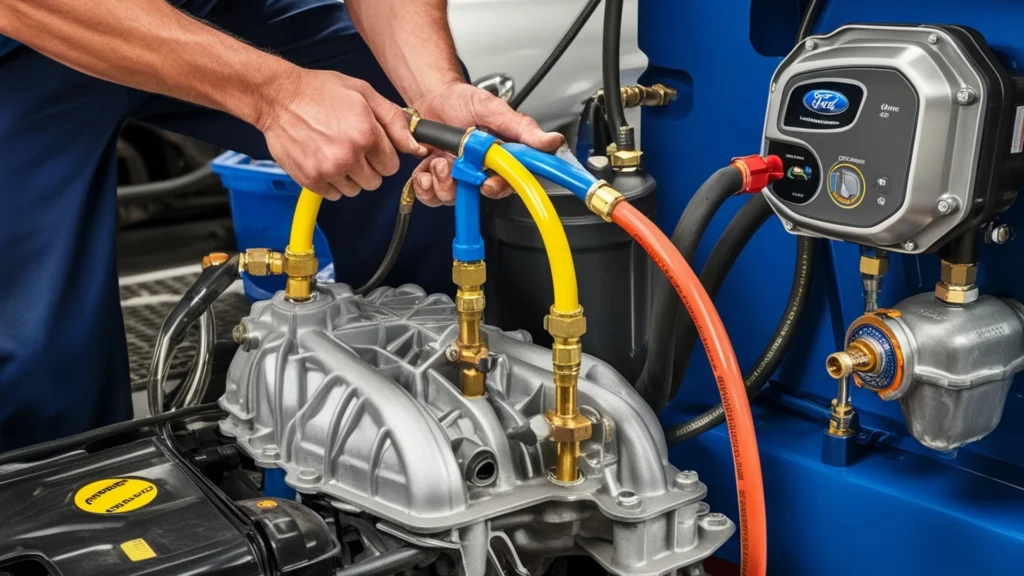
Your vehicle’s transmission depends on clean, properly conditioned fluid to lubricate internal components, control operating temperatures, and support smooth gear changes. Over time, transmission fluid can become contaminated or lose some of its effectiveness, which may affect transmission performance. A transmission flush is one service that may be recommended when the fluid needs to be replaced more thoroughly.
However, a transmission flush is not automatically necessary for every vehicle. The appropriate service depends on the vehicle’s transmission type, manufacturer recommendations, mileage, driving conditions, fluid condition, and overall transmission health. If you need professional assistance, auto repair Houston services can help determine which transmission service is appropriate for your vehicle.
What Is a Transmission Flush?
A transmission flush is a maintenance procedure designed to replace old transmission fluid with fresh fluid. Depending on the vehicle and service equipment, a flush may remove a larger amount of the old fluid than a conventional drain-and-fill service.
Transmission fluid performs several important functions inside an automatic transmission. It helps lubricate components, transfer hydraulic pressure, manage heat, and support proper operation of the transmission system.
Over time, fluid can become dark or contaminated and may contain wear-related particles. A transmission service can help maintain fluid quality, but the correct procedure varies by vehicle. Some manufacturers recommend a drain-and-fill rather than a machine flush, while certain vehicles may have specific procedures that should be followed.
What Does Transmission Fluid Do?
Transmission fluid is more than a lubricant. It is an important part of how an automatic transmission operates and helps protect its internal components.
Transmission fluid can help:
- Lubricate Internal Components: Fluid reduces friction between moving transmission components and helps limit wear during normal operation.
- Control Heat: Transmission operation creates heat, and the fluid helps absorb and transfer heat away from internal components.
- Transfer Hydraulic Pressure: Automatic transmissions use fluid pressure to operate various internal components involved in gear changes.
- Keep Components Clean: Transmission fluid contains additives that help control deposits and contaminants as the transmission operates.
- Support Smooth Shifting: Proper fluid condition and level can contribute to consistent transmission operation and gear changes.
When fluid becomes degraded, contaminated, or too low, transmission performance may be affected. Regular inspection and service can help identify fluid-related problems before they become more complicated.
How Does a Transmission Flush Work?
The exact process can vary depending on the vehicle, transmission design, and equipment being used. A professional technician first needs to determine the correct fluid type and service procedure for the vehicle.
A typical transmission service may involve:
- Inspecting the transmission and checking for visible leaks.
- Checking the fluid level and condition when the vehicle allows for inspection.
- Removing old transmission fluid according to the applicable service procedure.
- Replacing or servicing the transmission filter when required.
- Adding the manufacturer-specified transmission fluid.
- Checking the fluid level and transmission operation after service.
A machine-assisted flush may circulate fluid through the transmission system to replace a significant portion of the old fluid. However, a flush should not be treated as a universal solution for transmission problems. The vehicle manufacturer’s recommendations and the transmission’s condition should be considered before selecting the service.
When Do You Need a Transmission Flush?
Whether your vehicle needs a transmission flush depends on several factors. Mileage alone does not necessarily determine when transmission service is required because maintenance schedules vary between vehicles.
You may need transmission fluid service when:
- The manufacturer’s maintenance schedule calls for it.
- The transmission fluid has become degraded or contaminated.
- The vehicle has been driven under demanding conditions.
- The transmission has been operating at elevated temperatures.
- A technician identifies a need for fluid maintenance during an inspection.
- Your vehicle has reached the mileage or time interval specified for transmission service.
Some newer vehicles use sealed transmission systems or have specific fluid-service procedures, so it is important to follow the manufacturer’s requirements rather than relying on a general mileage interval.
If you are unsure about your vehicle’s transmission maintenance needs, an auto repair near me search can help you find a professional service provider for an inspection.
1. Follow the Manufacturer’s Maintenance Schedule
The manufacturer’s recommended maintenance schedule is one of the most useful starting points when determining whether transmission fluid service is due. Service intervals can differ substantially between makes, models, transmission types, and model years.
Some vehicles may have recommended transmission fluid replacement intervals, while others may specify different inspection or service requirements. Always use the maintenance information for your specific vehicle instead of assuming that every transmission requires a flush at the same mileage.
2. Consider Your Driving Conditions
Driving conditions can affect how hard a transmission works. Frequent stop-and-go traffic, towing, carrying heavy loads, driving in extreme temperatures, and other demanding conditions can place additional stress on the transmission.
If your vehicle is regularly operated under severe conditions, its maintenance requirements may differ from those of a vehicle used primarily for normal highway driving. Your owner’s manual or a qualified technician can help determine whether additional transmission service is appropriate.
3. Pay Attention to Transmission Fluid Condition
Transmission fluid can change in appearance and condition as it ages. Fluid that appears unusually dark, contaminated, or has an unusual odor may indicate that the fluid or transmission requires attention.
Fluid appearance alone should not determine whether a flush is necessary. A technician can consider the fluid condition along with the vehicle’s maintenance history, mileage, transmission type, and operating symptoms before recommending a service.
4. Address Transmission Symptoms Promptly
Transmission problems can sometimes produce noticeable symptoms before a major failure occurs. Delayed engagement, slipping, unusual noises, harsh shifting, or difficulty changing gears may indicate a transmission-related issue.
These symptoms should not automatically be treated as evidence that the vehicle simply needs a transmission flush. Mechanical or electrical problems can also produce similar symptoms. A proper inspection can help identify the underlying cause before maintenance or repairs are performed.
Transmission Flush vs. Transmission Fluid Change
A transmission flush and a conventional transmission fluid change are not necessarily the same service. A fluid change generally involves draining the old fluid and replacing it with fresh fluid, while a flush may use specialized equipment to replace a larger portion of the existing fluid.
The appropriate service depends on the vehicle and manufacturer recommendations. Some transmissions may be better suited to a drain-and-fill procedure, while others may have specific service requirements.
It is also important to understand that neither service repairs worn or damaged internal transmission components. Fresh fluid may support proper maintenance, but it cannot reverse mechanical damage that has already occurred.
Can a Transmission Flush Fix Shifting Problems?
A transmission flush should not be considered a guaranteed solution for shifting problems. If degraded or incorrect fluid is contributing to a transmission issue, replacing the fluid may help restore proper operation in some situations.
However, shifting problems can have many potential causes, including worn components, low fluid caused by a leak, electrical problems, sensor issues, hydraulic problems, or other transmission faults. Performing a flush without identifying the cause may not resolve the underlying problem.
If your vehicle is experiencing unusual shifting behavior, professional diagnosis is generally more appropriate than assuming that a transmission flush is the necessary repair.
Signs Your Transmission May Need Service
Transmission-related problems can appear in different ways. Paying attention to changes in vehicle behavior can help you identify when an inspection may be necessary.
Common warning signs may include:
- Delayed engagement when shifting into Drive or Reverse.
- Slipping or unexpected changes between gears.
- Harsh or unusually rough shifting.
- Unusual whining, humming, or other transmission-related noises.
- Fluid leaking beneath the vehicle.
- An unusual burning odor.
- Difficulty maintaining the expected gear.
- A transmission warning light or check-engine light.
These symptoms do not automatically mean that a transmission flush is needed. They may indicate a more significant problem that requires diagnosis and repair.
When Should You Avoid a DIY Transmission Flush?
Transmission service is not always a suitable DIY project. Using the wrong fluid, incorrect fluid level, or an improper service procedure can create additional problems.
Professional assistance is especially important when:
- You are unsure which transmission fluid your vehicle requires.
- The transmission is leaking.
- The vehicle has significant shifting problems.
- You cannot determine the correct fluid level.
- The transmission has a sealed or specialized design.
- The vehicle requires specialized service equipment.
- There is evidence of internal transmission damage.
A professional technician can inspect the transmission, identify potential problems, and determine whether a flush, fluid change, repair, or another service is appropriate.
How Often Should You Get a Transmission Flush?
There is no single transmission flush interval that applies to every vehicle. Service requirements depend on the vehicle manufacturer, transmission design, fluid type, mileage, age, and driving conditions.
Instead of following a universal mileage number, check your vehicle’s owner’s manual and maintenance schedule. If the manufacturer specifies a particular transmission fluid service procedure, that recommendation should generally take priority over generic flush intervals.
If you do not have your maintenance records or are unsure when the transmission was last serviced, an auto shop near me can inspect the vehicle and help determine what maintenance may be due.
Professional Transmission Service at Eric’s Car Care
Transmission fluid maintenance can be an important part of keeping your vehicle operating properly, but the right service depends on the specific transmission and its condition. A professional inspection can help determine whether your vehicle needs a transmission flush, a fluid change, further diagnosis, or another repair.
Eric’s Car Care provides automotive repair and maintenance services in Houston. Its technicians can assess vehicle concerns and help identify the appropriate service based on the vehicle’s condition and maintenance needs. If your vehicle has shifting concerns, fluid leaks, unusual transmission behavior, or is due for scheduled transmission maintenance, having it inspected can help identify the appropriate next step before a minor maintenance issue develops into a more extensive repair.