
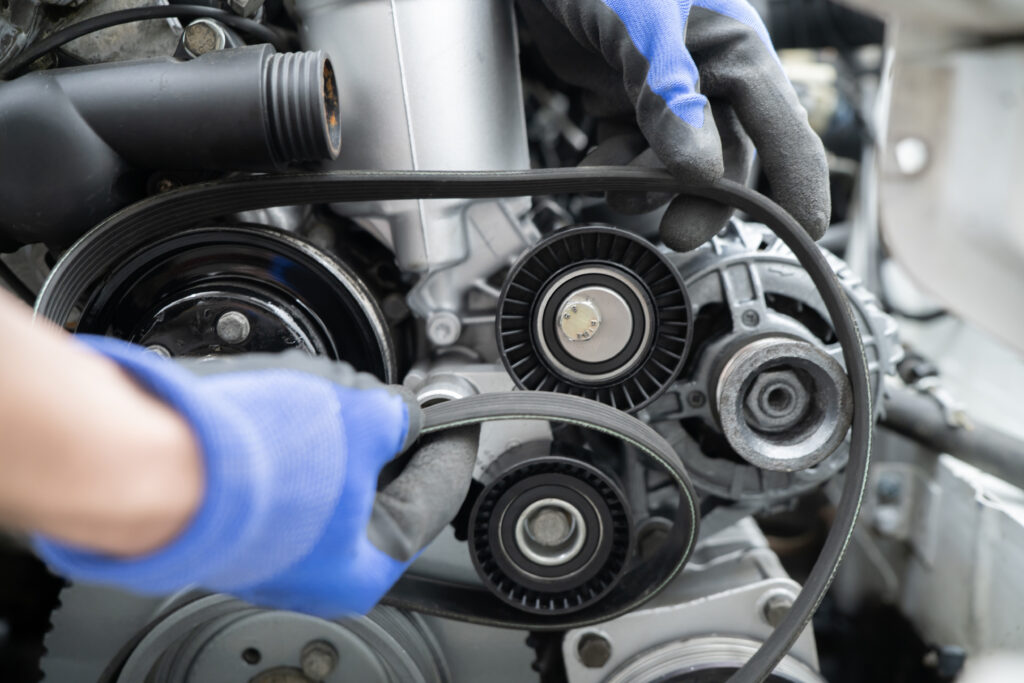
Deep inside your engine, a timing belt or timing chain keeps critical parts moving in perfect sync. If it fails, your engine can stop running instantly and, in some cases, suffer serious internal damage. Many drivers do not know which one their car has or how to care for it. Understanding timing belt vs. timing chain differences can help you plan maintenance and avoid costly surprises. Simple habits matter too, which is why regular service from the best oil change near me options is especially important for chain-driven engines.
In this guide, we explain how each system works, how long they last, warning signs of trouble, and how to protect your engine. Ask Eric’s Car Care whether your vehicle has a belt or chain at your next visit.
What Does A Timing Belt Or Chain Do?
The timing component connects the crankshaft to the camshaft or camshafts. This keeps the engine’s valves opening and closing at exactly the right time as the pistons move up and down. Without precise timing, the engine cannot run properly.
What Is A Timing Belt?
A timing belt is made of reinforced rubber with teeth that grip the pulleys. It runs quietly and is lighter and less expensive to make than a chain. However, rubber wears out over time, so timing belts must be replaced at scheduled intervals.
Typical Timing Belt Lifespan
Many manufacturers recommend replacement somewhere between 60,000 and 100,000 miles, or after a certain number of years. Always check your owner’s manual for your vehicle’s exact interval.
What Is A Timing Chain?
A timing chain is made of metal links, similar to a bicycle chain, and runs inside the engine, where it is lubricated by motor oil. Chains are designed to last much longer than belts and often last the life of the engine when properly maintained.
Typical Timing Chain Lifespan
Many timing chains last 150,000 miles or more. However, guides, tensioners, and the chain itself can wear early if oil changes are neglected.
Key Differences Between The Two Systems
- Material: Belts are rubber, while chains are metal.
- Location: Belts usually run outside the engine under a cover, while chains run inside the engine.
- Maintenance: Belts need scheduled replacement, while chains rely on clean oil.
- Noise: Belts are quieter, while chains may be slightly louder.
- Failure warning: Belts often fail with little warning, while chains often rattle before failing.
Why Oil Changes Matter For Timing Chains
Because timing chains are lubricated by engine oil, dirty or low oil can wear the chain, guides, and hydraulic tensioners. A stretched chain can throw off timing, trigger a check engine light, and eventually cause major damage. Skipping a cheap, quick oil change near me visit can turn into one of the most expensive engine repairs.
Warning Signs Of Timing Belt Or Chain Problems
1. Ticking Or Rattling Noise
A rattle at startup or idle may point to a worn chain or tensioner. The noise is often loudest for a few seconds after a cold start, before oil pressure builds up and takes up the slack. A sound that fades as the engine warms up is still worth having checked.
2. Engine Misfires Or Rough Running
A slipped belt or stretched chain can change timing enough to cause misfires. You may notice shaking at idle, hesitation when you accelerate, or a loss of power. These symptoms can look like an ignition problem, so a technician should check the timing before replacing parts that may not be at fault.
3. Check Engine Light
Timing correlation codes are common when a chain begins to stretch. The engine computer compares the crankshaft and camshaft positions, and the light can come on when they no longer line up as expected. Having the codes read early can catch a worn chain before it causes bigger damage.
4. Oil Leaks Near The Front Of The Engine
Oil leaks around the timing cover can damage a belt or signal seal problems. Oil on a rubber timing belt can soften it and make it slip or wear faster. Look for drips or oily residue at the front of the engine, and have the source found before the belt is affected.
5. Engine Will Not Start
A broken timing belt often causes the engine to crank but not start. The starter still turns the engine over, but the valves and pistons are no longer moving in sync, so there is no combustion. Do not keep cranking the engine, because on an interference engine this can lead to more internal damage.
What Is An Interference Engine?
In an interference engine, the valves and pistons occupy the same space at different times. If the timing belt or chain breaks, the pistons can strike the valves, causing bent valves and major engine damage. If your car has an interference engine, replacing the timing belt on schedule is especially important.
What Else Is Replaced With A Timing Belt?
Mechanics often recommend replacing the water pump, tensioner, and idler pulleys at the same time, since they are behind the same covers. Doing it together saves labor costs and reduces the risk of a second failure soon after. A shop that offers complete car repair Houston, TX services can inspect these parts and recommend what is truly needed.
Timing Belt And Chain Service At Eric’s Car Care
Whether your vehicle has a timing belt or chain, proper maintenance is the key to a long engine life. Eric’s Car Care has served Houston drivers for decades, with locations near the Medical Center and Rice Village. Our technicians handle timing belt replacement, chain diagnostics, and routine oil change Houston drivers count on. Contact us today to schedule service.
Key Takeaways
- A timing belt or chain keeps the engine in sync. It connects the crankshaft to the camshaft or camshafts so the valves and pistons move at the right time.
- Belts are rubber and need scheduled replacement. Many manufacturers recommend it between 60,000 and 100,000 miles, so check your owner’s manual.
- Chains are metal and often last much longer. Many last 150,000 miles or more when properly maintained.
- Clean oil protects a timing chain. Dirty or low oil can wear the chain, guides, and tensioners.
- Warning signs include rattling, misfires, and a check engine light. Oil leaks near the timing cover and a no-start are also signs of trouble.
- A failure can be costly on an interference engine. The pistons can strike the valves and cause major damage.
- Replace related parts together. The water pump, tensioner, and idler pulleys are often done with a timing belt to save labor.
Frequently Asked Questions
How Do I Know If My Car Has A Timing Belt Or Chain?
Check your owner’s manual or ask a technician. Many newer vehicles use chains, but some still use belts. The engine size and model year can also change the answer, so a technician can confirm it from your VIN. This matters because a belt has a replacement schedule and a chain does not.
Can A Timing Chain Be Replaced?
Yes. Replacement is labor-intensive but sometimes necessary when the chain, guides, or tensioners wear out. Technicians usually replace the chain, guides, and tensioners together, since new parts on a worn set can wear out quickly. Catching a rattle or timing code early can keep the repair smaller.
How Often Should Oil Be Changed In A Chain-Driven Engine?
Follow your manufacturer’s recommended interval, and shorten it if you drive in severe conditions like heavy stop-and-go traffic. Clean oil keeps the chain, guides, and hydraulic tensioner lubricated, while old, dirty oil speeds up wear. Checking the oil level between changes is also a good habit, since low oil can harm a timing chain.