
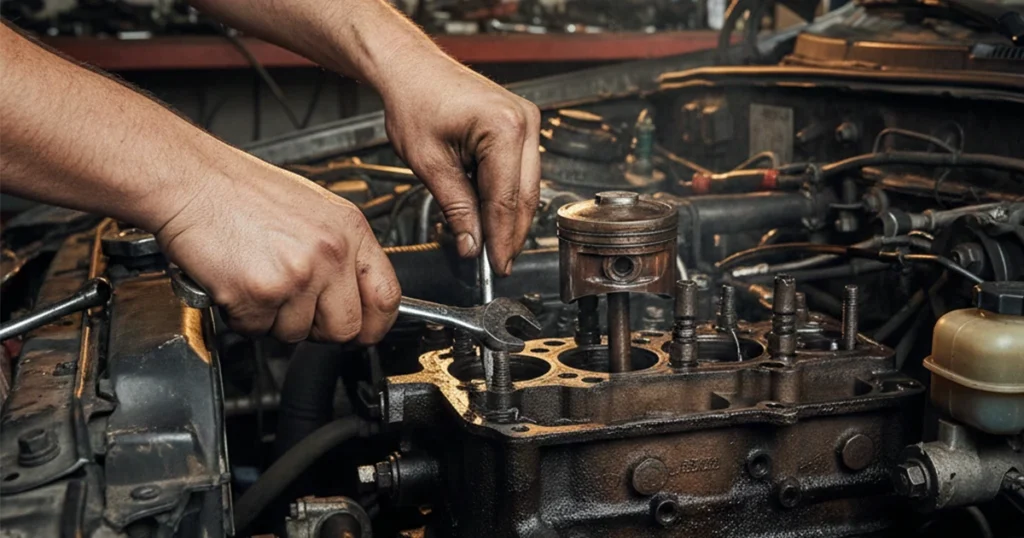
Every car engine is built differently, and the way it functions depends on its design, size, and number of components. From compact 4-cylinder engines to larger V6 and V8 configurations, each engine has hundreds of interconnected parts working together under extreme heat and pressure.
For example, a typical Ford 4-cylinder engine contains over 500 individual components, including pistons, crankshaft, bearings, valves, timing components, and lubrication systems. When even a single critical part fails or is deprived of proper oil or cooling, it can trigger a chain reaction that ultimately leads to a seized engine, making timely diagnosis and repair essential.
Searching for “engine repair Houston”, contact Eric’s Car Care to get your vehicle running like new. We provide trusted auto repair Houston drivers have relied on for decades.
What Is a Seized Engine?
A seized engine is an engine that can no longer turn or operate because its internal parts have locked up or fused together. This usually happens when critical components are damaged by extreme heat, lack of lubrication, or mechanical failure. When an engine seizes, the crankshaft won’t rotate, the pistons can’t move inside the cylinders, and the vehicle will not start or may suddenly stall while driving.
Common causes include running the engine without oil, severe overheating, water entering the engine (hydrolock), or long-term neglect. A seized engine is one of the most serious engine problems and often requires a full rebuild or complete engine replacement.
If you’re searching for ‘auto repair near me,’ we’re here to help — book your service today.
What Causes an Engine to Seize
An engine seizes when its internal parts can no longer move freely due to severe damage, heat, or friction. The most common causes include:
1. Lack of Engine Oil
What happens:
When oil levels are low or oil is contaminated, metal components rub directly against each other, creating excessive heat and friction that can permanently lock the engine.
Repair guide:
- Turn off the engine and let it cool completely.
- Drain any remaining oil and inspect for metal shavings.
- Refill with fresh, manufacturer-recommended oil.
- Check and repair any oil leaks.
- Attempt to manually rotate the engine (if partially seized).
- Replace damaged bearings, pistons, or rods if necessary.
- In severe cases, consider a full engine rebuild or replacement.
Is your engine seized or beyond repair? Eric’s Car Care in Houston provides fast, reliable engine replacement services to get your vehicle running like new
2. Engine Overheating
What happens:
Extreme heat causes pistons, rings, and bearings to expand beyond tolerance, leading to warped cylinder heads or seized pistons.
Repair guide:
- Allow the engine to cool.
- Inspect the cooling system: radiator, hoses, thermostat, and water pump.
- Perform a compression and leak-down test to identify damaged cylinders.
- Replace warped cylinder heads or pistons as needed.
- Refill coolant and test for proper operation.
- Consider a full engine rebuild if multiple components are damaged.
Searching for “engine repair near me”? Eric’s Car Care in Houston offers fast, reliable service to get your vehicle running like new.”
3. Hydrolock (Water or Coolant in Cylinders)
What happens:
Because liquids cannot compress, water or coolant entering the cylinders can instantly stop piston movement and bend connecting rods.
Repair guide:
- Remove spark plugs to relieve cylinder pressure.
- Turn the engine manually to expel liquid.
- Inspect cylinders and pistons for rust or scoring.
- Replace bent connecting rods or damaged pistons.
- Repair the source of the water/coolant entry (head gasket, intake, or block).
- Test engine rotation before attempting to start.
4. Bearing Failure
What happens:
When rod or main bearings wear out or spin, they block crankshaft rotation and generate severe internal damage.
Repair guide:
- Disassemble the engine to access bearings.
- Inspect crankshaft journals and bearings for damage.
- Replace damaged bearings and polish or regrind crankshaft if needed.
- Ensure proper lubrication and oil pressure before reassembly.
- Reassemble the engine and perform a test run.
5. Mechanical Failure
What happens:
Broken pistons, snapped rods, or timing component failures allow internal parts to collide, locking the engine.
Repair guide:
- Remove the engine or cylinder head to inspect internal components.
- Identify and replace broken pistons, rods, valves, or timing parts.
- Check the block and head for cracks or warping.
- Reassemble the engine with new gaskets and lubricants.
- Test engine rotation and run under supervision.
6. Rust and Long-Term Neglect
What happens:
Engines left unused develop corrosion on cylinder walls and rings, preventing pistons from moving freely.
Repair guide:
- Apply penetrating oil to cylinders and moving parts.
- Attempt manual rotation of the crankshaft.
- Clean or hone cylinders to remove light rust.
- Replace piston rings, gaskets, or any corroded components.
- In heavy corrosion, consider cylinder boring or full engine replacement.
7. Running the Engine Too Hard
What happens:
Sustained high RPMs, heavy towing, or ignored maintenance overstress internal components and accelerate wear.
Repair guide:
- Inspect the engine for damaged bearings, pistons, or rods.
- Replace any worn or broken internal components.
- Check and repair cooling and lubrication systems.
- Reassemble and run the engine at normal operating conditions.
- Advise on proper maintenance schedules and load limits to prevent recurrence.
Get Expert Help Before It’s Too Late
Don’t wait until a minor issue turns into a full-blown engine seizure. Whether it’s a partial lock-up or total engine failure, Eric’s Car Care in Houston provides expert diagnosis, reliable repairs, and complete engine replacements to get your vehicle back on the road safely and efficiently. Contact us today to protect your engine and your investment.