
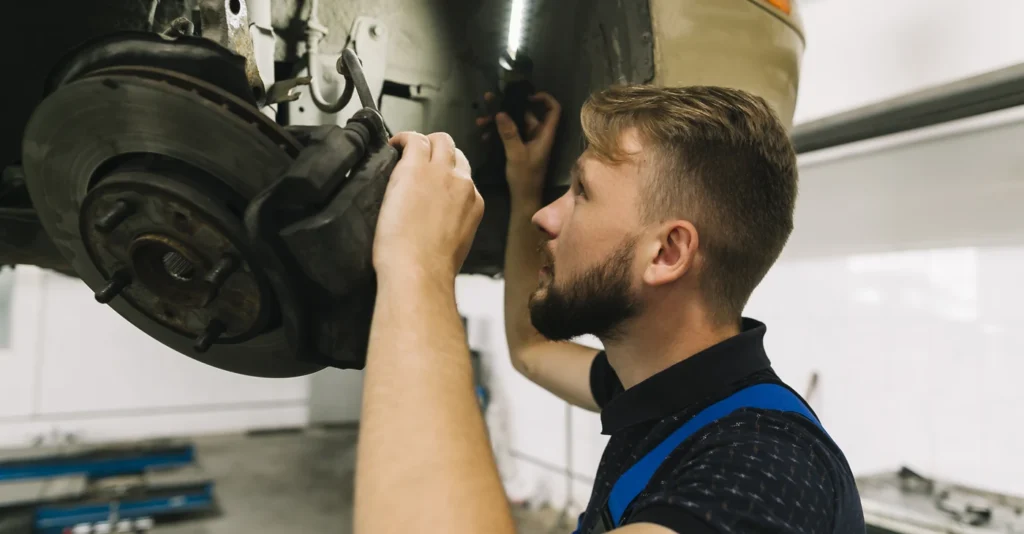
If you’ve ever wondered why my brakes are squeaking, you’re not alone. Many drivers notice a high-pitched squeal or grinding noise when applying the brakes, and it’s often a sign that something in your braking system needs attention. While a brief squeak may not always indicate a major problem, persistent noises should never be ignored; they could point to worn brake pads, brake hardware issues, or brake rotor issues. For a proper diagnosis, visiting a trusted auto repair Houston shop can help catch the problem before it worsens.
Regular brake inspections are essential for safety, and if you’re searching for auto repair near me or reliable Brakes Near Me, our team can help ensure your brakes function safely and quietly.
Common Reasons Your Car’s Brakes Squeak
There are several common causes behind car’s brakes squeaking. Understanding these can help you diagnose the problem before it becomes more serious:
1. Worn Brake Pads
One of the most common reasons for squeaky brakes is simply worn brake pads. Over time, brake pads thin out and their metal wear indicators start rubbing against the rotors, producing that distinct squealing noise. Watch out for these worn brake pads symptoms:
- A high-pitched sound when braking
- Reduced braking performance
- Vibration or pulsation in the brake pedal
If you notice any of these signs, it’s time for a brake inspection.
2. Brake Rotor Issues
Another reason brakes squeak when braking could be brake rotor issues. Warped or uneven rotors can cause vibration and noise as the brake pads make contact. Common rotor-related symptoms include:
- Pulsation in the brake pedal
- Uneven brake wear
- Noise that persists even with new pads
Repairing or resurfacing rotors is often necessary to restore smooth, quiet braking.
3. Dust, Dirt, and Moisture
Even if your pads and rotors are in good condition, dirt, dust, or moisture can cause temporary squeaking. A quick cleaning or gentle braking to heat up the brakes can sometimes resolve these minor issues.
4. Brake Hardware or Lubrication
Sometimes squeaky brakes are caused by missing or dry anti-rattle clips or insufficient lubrication on the back of brake pads. Properly installed hardware and lubrication can eliminate these noises.
Preventing Squeaky Brakes
To prevent car brakes squeak and ensure your braking system is safe:
- Schedule regular brake inspections
- Replace worn pads promptly
- Address brake rotor issues early
- Keep brakes clean and properly lubricated
Professional mechanics can spot potential problems before they become dangerous. If you’re searching for brake repair near me, booking a consultation with a trusted shop is the best approach.
When to Seek Professional Help
Persistent noise or unusual sounds when braking are a clear sign that your brakes need attention. Squeaking or squealing can be caused by worn brake pads, moisture buildup, or debris lodged between the pads and rotors, all of which may affect braking performance if left unchecked. Even small issues like dust or corrosion can lead to more serious damage over time, and a grinding noise often means the pads are worn down completely, and the metal backing is contacting the rotor, a situation that demands immediate service.
Whether it’s squeaky brakes, worn brake pads symptoms, brake rotor problems, or any other troubling sound or feel, professional inspection is essential for your safety. At Eric’s Car Care, we provide expert Brake Repair Houston services to accurately diagnose and fix brake issues quickly and effectively. Our technicians will assess pad wear, rotor condition, and overall brake health so you can drive with confidence and avoid costly repairs down the road.
Takeaway
If you notice your brakes making unusual noises, don’t ignore them. Understanding why my brakes are squeaking and addressing the underlying causes, from worn brake pads symptoms to brake rotor issues, can prevent accidents and costly repairs.
Book Your Brake Inspection Today!
Regular brake maintenance keeps your car safe, reliable, and quiet ensuring smooth stops every time you hit the road.