
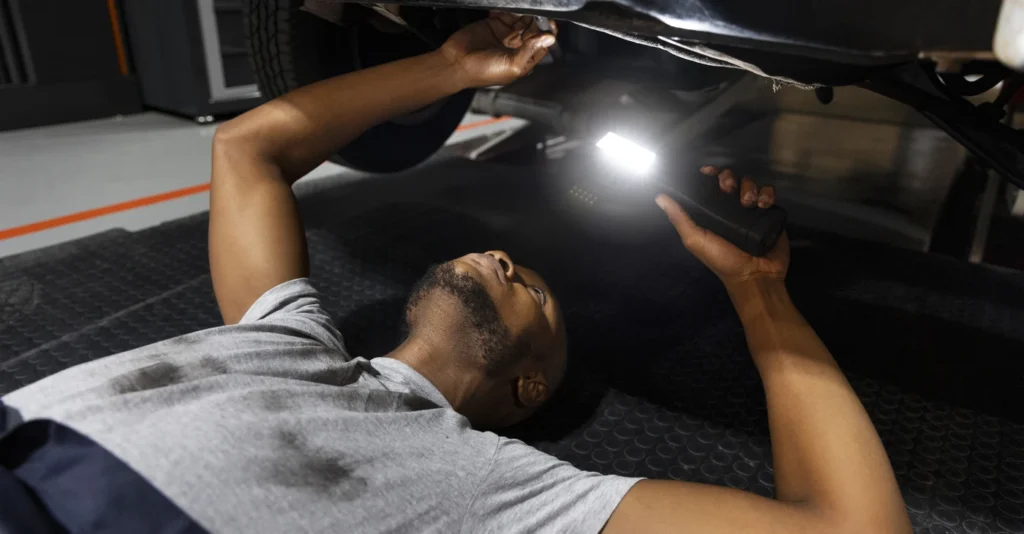
If you’ve ever wondered why is my brake light on, you’re not alone. Many drivers see a red or yellow warning light on their dashboard and are unsure whether it’s urgent. Your car’s braking system is one of the most important safety features, and a warning light should never be ignored. Understanding brake warning light meaning can help you identify issues early and keep your vehicle safe, and getting it checked at a trusted auto repair Houston service can ensure the problem is diagnosed and fixed promptly.
For professional inspection and repair, our Brakes Near Me services are ready to help.
If you’re searching for ‘auto repair near me,’ we’re here to help — book your service today.
Common Causes of Brake Warning Lights
There are several causes of ABS and brake lights to come on, including:
- Low brake fluid levels
- Worn brake pads or shoes
- ABS system malfunctions
- Faulty brake light switch
A lit brake warning light signals that your braking system needs attention, and it’s essential to address it promptly to prevent safety hazards.
Brake System Warning Light Explained
Your brake system warning light is designed to alert you when something isn’t working properly. It can indicate low fluid, a failing master cylinder, or issues with ABS sensors. Ignoring this warning may lead to decreased braking efficiency or, in worst-case scenarios, brake failure.
One common diagnostic step is brake light switch troubleshooting. This involves checking the brake light switch at the pedal, which can sometimes cause the warning light to come on even if the rest of the braking system is fine. If your warning light persists, it’s best to schedule professional Brake Repair Houston services to ensure your braking system is safe and fully functional.
ABS Brake Warning Light Problem
Sometimes, the ABS system triggers its own warning light. An ABS brake warning light problem may occur due to:
- Faulty wheel speed sensors
- Electrical issues in the ABS module
- Low brake fluid levels
If your ABS light is on along with the general brake warning light, it’s best to have a certified mechanic inspect the system immediately.
What to Do if Your Brake Light Comes On
If you notice your brake light illuminated on the dashboard, here’s what you should do:
- Check Brake Fluid Levels: Low fluid can trigger the warning light.
- Inspect Brake Pads: Worn pads can affect system pressure and light activation.
- Look for ABS Issues: Scan for error codes or ABS malfunctions.
- Consult Professionals: Bring your car to a trusted service provider for a thorough inspection.
Prompt attention to warning lights helps prevent accidents and ensures your brakes function properly.
Brake Light & ABS Warning: Key Points to Remember
Your car’s brake warning light meaning is a crucial indicator of system health. Whether it’s caused by low fluid, a faulty switch, or an ABS issue, understanding the causes of ABS and brake light to come on and taking quick action can save you from dangerous situations.
If you notice the light on, our expert team provides reliable Auto Repair Near Me services to diagnose and fix the problem efficiently.
Book Your Brake Inspection Today!
Regular maintenance and immediate attention to brake system warning light alerts ensure your vehicle stays safe, responsive, and reliable.