
Keeping your engine clean is essential for long-term performance, and knowing how to flush engine oil helps maintain a healthy engine. Over time, oil collects dirt, metal particles, and carbon deposits that form sludge and restrict lubrication. Research by Consumer Reports shows 4.7 million U.S. engines face sludge-related problems, often from missed or infrequent oil changes. Flushing engine oil removes harmful buildup and ensures your vehicle runs efficiently, making professional oil change Houston services a smart choice.
If you’re searching for auto repair near me, visit Eric’s Car Care, your trusted auto repair Houston shop. With over 50 years of experience and ASE-certified technicians, we provide reliable service and expert repairs Houston drivers trust.
Early Indicators Your Engine Needs a Motor Flush
At Eric’s Car Care, we often see vehicles showing early signs that an engine oil flush is needed. Here are the most common indicators that it’s time to clean your engine:
- Dark, Dirty, or Sludgy Oil: If your engine oil looks unusually thick, dark, or has a sludgy texture, it may be clogged with contaminants. This is a clear indicator that an engine oil flush could help restore proper lubrication.
- Unusual Engine Noises: Knocking, ticking, or grinding sounds from the engine can signal that oil isn’t flowing properly due to sludge buildup. A motor flush can help clean the internal components and reduce friction.
- Overheating Engine: Sludge and deposits can block oil passages, causing the engine to overheat. Performing an oil flush helps improve circulation and cooling.
- Poor Performance or Reduced Fuel Efficiency: If your car feels sluggish, accelerates slowly, or consumes more fuel than usual, contaminated oil may be the culprit.
If you notice these signs, it’s the perfect time to search for oil change near me and schedule a professional engine oil flush with trusted technicians.
How to Properly Flush Engine Oil: Step-by-Step
Flushing your engine oil properly is a process that ensures all the sludge, carbon deposits, and contaminants are removed from your engine before adding fresh oil. Doing it correctly helps extend engine life, improve performance, and maintain proper lubrication. Here’s a detailed step-by-step guide on how to perform an engine oil flush:
1. Warm Up the Engine
Start your vehicle and let it idle for 5–10 minutes. Warming the engine helps the oil flow more easily and loosens some of the sludge and deposits inside the engine. Warm oil is thinner and can carry contaminants out more effectively during the flush.
2. Add Engine Flush Solution
Turn off the engine and pour a high-quality engine flush additive into the engine through the oil filler cap. These solutions are specially formulated to break down sludge, varnish, and carbon buildup. Make sure to read the manufacturer’s instructions carefully, as the amount and procedure can vary depending on the product.
3. Run the Engine
Start the engine again and let it idle for 10–15 minutes. During this time, the flush solution circulates through the engine, dissolving deposits and cleaning the oil passages. Do not drive the car while the flush is in process, as the solution is not designed for high temperatures or heavy load conditions.
4. Drain the Old Oil
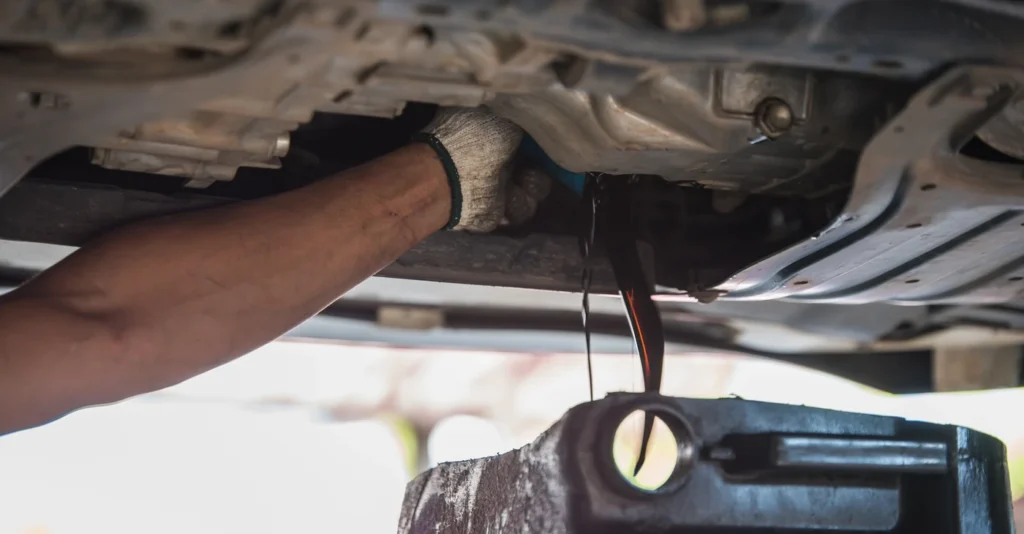
After idling, turn off the engine and place a large drain pan under the oil pan. Remove the oil drain plug and allow the old oil mixed with the flush solution to completely drain out. Be careful, as the oil may still be hot.
5. Replace the Oil Filter
Over time, sludge and contaminants can get trapped in the oil filter. Removing the old filter and replacing it with a new one ensures that fresh engine oil stays clean. This step is essential to maintain proper lubrication and protect your engine from damage.
6. Refill with Fresh Oil
Reinstall the oil drain plug securely and pour in the recommended type and amount of fresh engine oil for your vehicle. Check your owner’s manual for the correct specifications. Using high-quality synthetic or conventional oil as per your car’s requirements will maximize engine protection.
Read more: How to Change Oil in Car
7. Check Oil Levels and Inspect
Start the engine for a minute, then turn it off and wait a few minutes. Use the dipstick to check that the oil level is correct. Inspect underneath the vehicle for leaks and ensure everything is properly tightened.
Related: How to Check Engine Oil
Get Professional Oil Change Houston Services
Proper engine maintenance, including a timely engine oil flush or motor flush, is key to keeping your vehicle running efficiently and preventing costly repairs. At Eric’s Car Care, we bring over 50 years of experience and a team of ASE-certified technicians who Houston drivers have trusted for decades. With professional tools, expert training, and a commitment to quality, we ensure your engine stays clean, lubricated, and performing at its best. Schedule your engine oil flush today and give your car the care it deserves.