
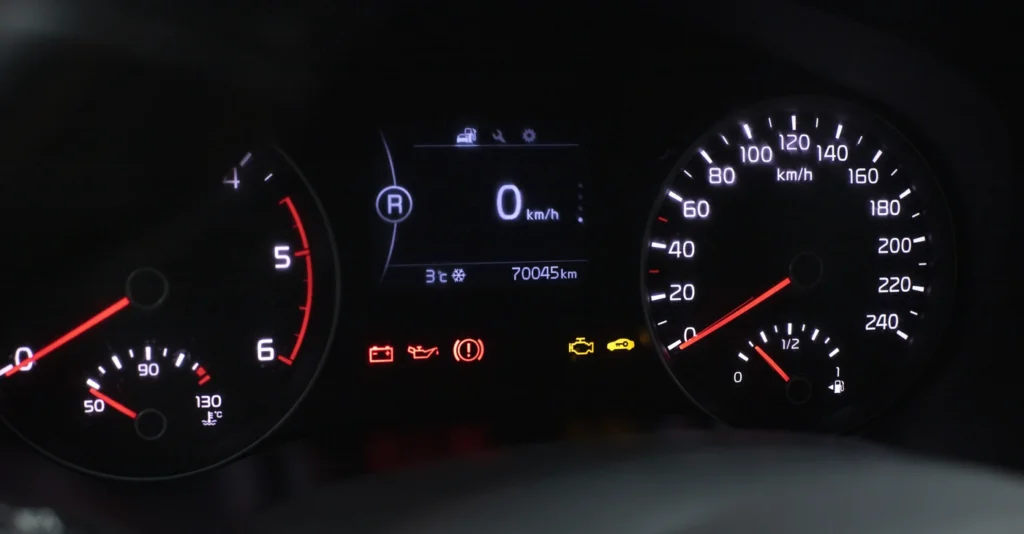
A blinking oil light is one of the most serious dashboard warnings you can see. In many cases, it means your engine is not getting the oil pressure it needs to stay protected. Common causes include low engine oil, a failing oil pump, a clogged oil filter, or internal engine wear. If you are asking, “Why is my oil light blinking?”, the safest approach is to find the cause quickly before it leads to costly engine damage.
Many drivers in Houston and West University notice a flashing oil light while idling in traffic or slowing down at an intersection. In some cases, the issue is caused by overdue maintenance, making a timely Auto Repair near me inspection an important step in protecting your engine. If the warning light continues to appear, having your vehicle inspected promptly can help prevent more expensive repairs down the road.
What Does an Oil Light Blinking Mean?
Your vehicle’s oil warning light monitors the engine’s lubrication system. When the light begins flashing instead of staying steady, it often indicates that oil pressure is dropping below safe levels. Engine oil creates a protective layer between moving metal parts, reducing friction and heat. Without enough oil pressure, those parts can wear out quickly or even seize.
A blinking red oil light should never be ignored. Even if the vehicle seems to run normally, low oil pressure can damage internal engine components within a short period. The warning system is designed to alert you before major damage occurs. Taking immediate action can save you from expensive repairs.
Why Is My Oil Light Flashing?
Several different issues can cause a flashing oil light. Some problems are relatively simple to fix, while others require a professional oil change Houston service or diagnosis. Understanding the possible causes can help you determine the urgency of the situation.
1. Low Engine Oil Level
Low engine oil is one of the most common reasons an oil light is flashing. Over time, engines naturally consume small amounts of oil, and leaks can cause levels to drop even faster. When the oil level becomes too low, the oil pump may struggle to maintain proper pressure throughout the engine.
You might also notice that the oil light comes on when braking or during sharp turns. This happens because the remaining oil shifts inside the oil pan, temporarily exposing the oil pickup tube. If adding oil solves the issue, you may still need an inspection to identify the reason for the oil loss.
Read More: How to Check Engine Oil
2. Low Oil Pressure
Oil pressure keeps lubrication flowing to every critical engine component. When pressure drops, the engine’s warning system activates the oil pressure light. Low pressure can result from oil leaks, worn internal parts, contaminated oil, or neglected maintenance.
Drivers often report that the oil light comes on and off before staying illuminated continuously. This intermittent warning is often an early sign of a developing lubrication problem. Addressing it quickly can prevent larger issues later.
3. Failing Oil Pump
The oil pump acts as the heart of your engine’s lubrication system. Its job is to circulate oil to every moving component. When the pump begins to fail, oil pressure drops, and the warning light may start blinking.
A failing oil pump can create ticking or knocking sounds from the engine. These noises occur because engine parts are not receiving enough lubrication. If you hear unusual sounds along with a warning light, stop driving and have the vehicle inspected immediately.
4. Clogged Oil Filter
Your oil filter removes dirt, debris, and contaminants from the oil. Over time, the filter can become clogged, especially if oil changes are delayed. A blocked filter restricts oil flow and may cause pressure problems.
Restricted oil circulation can trigger a blinking oil light, particularly when the engine is working harder. Regular oil and filter changes are one of the simplest ways to avoid this issue. Following the manufacturer’s maintenance schedule helps keep the lubrication system functioning properly.
5. Faulty Oil Pressure Sensor
Not every oil light warning points to a mechanical problem. Sometimes the oil pressure sensor itself fails, or the wiring becomes damaged. In these cases, the warning light may activate even when oil pressure remains within normal limits.
Modern vehicles rely heavily on sensors to monitor engine conditions. Diagnosing electrical faults often requires specialized testing equipment. A trusted auto repair Houston shop can verify whether the issue involves the sensor, wiring, or an actual oil pressure problem.
6. Overheating Engine or Wrong Oil Viscosity
Engine oil must maintain the proper thickness to provide protection. If the engine overheats, the oil can thin out and lose its ability to maintain pressure. Similarly, using the wrong oil grade may affect lubrication performance.
Many vehicles require specific oil viscosities based on design and operating conditions. Using oil that is too thin or too thick can create pressure issues. Following manufacturer recommendations is important for long-term engine health.
7. Wear Inside the Engine
As engines accumulate miles, internal components naturally wear. Increased clearances between parts can make it difficult for the lubrication system to maintain proper pressure. This is especially common in older vehicles with high mileage.
Engine wear develops gradually over time. The warning light may first appear only under certain conditions, such as when the engine is hot. Eventually, the problem may become more frequent as wear progresses.
8. Worn-Out Crankshaft Bearings
Crankshaft bearings support one of the most important rotating components inside the engine. When these bearings wear out, oil escapes through larger gaps, causing pressure to drop.
A worn bearing condition often produces knocking sounds and low oil pressure warnings. Unfortunately, bearing wear is typically a serious repair that requires professional attention. Early diagnosis can sometimes prevent further damage.
9. Check the Oil Strainer
The oil strainer sits inside the oil pan and helps prevent debris from reaching the oil pump. Sludge buildup can block the strainer and restrict oil flow. When this happens, the oil pump cannot supply adequate lubrication to the engine.
Vehicles that miss regular maintenance are more likely to develop sludge-related problems. Cleaning the strainer or performing an oil pressure sensor replacement, when a faulty sensor is causing inaccurate warnings, can restore proper oil circulation and eliminate warning light issues.
Risks of Driving With an Oil Light Blinking
Continuing to drive with a blinking oil warning can cause severe engine damage. Without proper lubrication, metal parts create excessive heat and friction. This accelerates wear and increases the likelihood of component failure.
In extreme cases, the engine can seize completely. Engine replacement often costs far more than addressing the original oil pressure problem. Treating the warning seriously can help you avoid significant repair expenses.
Oil Light Blinking? Follow These Important Steps
If you notice an oil light blinking warning, take the following steps immediately:
- Pull over safely as soon as possible and turn off the engine.
- Check the engine oil level using the dipstick once the engine has cooled down.
- Add the recommended oil if the level is low, but remember that low oil may not be the only cause of the warning.
- Do not continue driving if the oil light remains on or keeps flashing after adding oil.
- Listen for unusual engine noises, such as knocking, ticking, or grinding sounds, which may indicate low oil pressure.
- Arrange a professional inspection to identify the root cause and prevent engine damage.
Low oil pressure can damage critical engine components even during short trips. If the warning persists, scheduling an inspection with a trusted auto repair shop like Eric’s Car Care is the safest next step.
Oil Light Blinking? Schedule Service at Eric’s Car Care
A blinking oil light usually signals a problem that needs immediate attention. Whether the cause is low oil, a clogged filter, a failing oil pump, or internal engine wear, addressing the issue quickly helps protect your engine and your wallet. Understanding why my oil light is blinking? allows you to make informed decisions before serious damage occurs.
If you live in Houston or West University, Texas, and need professional help, consider Eric’s Car Care. Serving local drivers for over 50 years, our ASE-Certified team has extensive experience diagnosing oil pressure and engine-related concerns. You can learn more or schedule an inspection through our website. Getting expert guidance early can provide peace of mind and help keep your vehicle running safely for years to come.