
Your brakes are one of the most important safety systems on your vehicle, but choosing the right brake pads can be confusing. If you are comparing ceramic vs semi-metallic brake pads, you are probably wondering which option offers better stopping power, longer life, and better value for your money. The answer depends on how you drive and what you expect from your vehicle.
Whether you commute through Houston traffic, drive around West University Place, or tow heavy loads across Texas highways, the right brake pad material can make a noticeable difference. Understanding the pros and cons of each option helps you make a smarter decision before your next brake service. If you have been searching for Auto Repair Houston and want to know which brake pads are right for your vehicle, understanding the differences between materials is a great place to start before trusting your car to a local repair professional.
What’s the Difference Between Semi-Metallic and Ceramic Brake Pads?
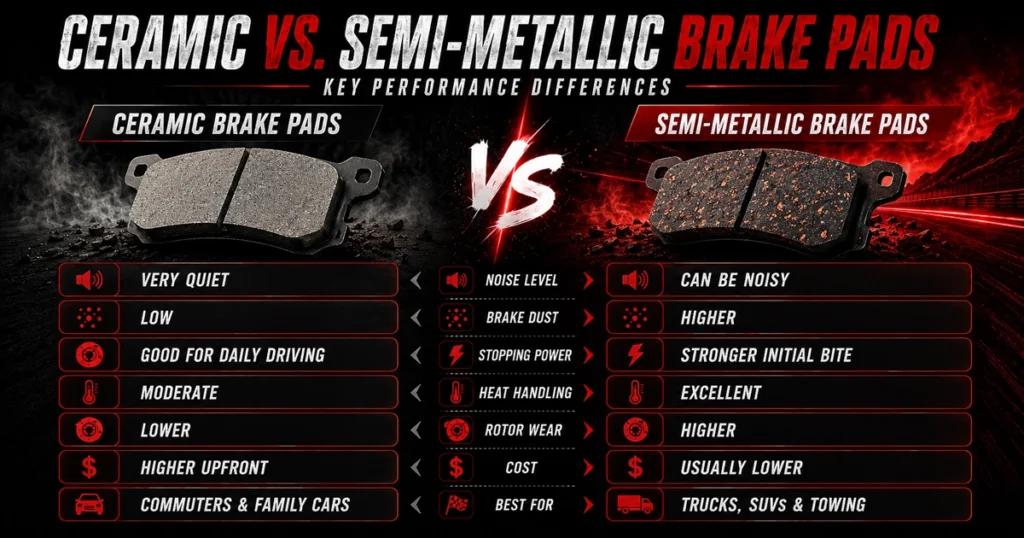
If you’re comparing brake pad options, the main differences between ceramic and semi-metallic types come down to performance, comfort, and durability. The table below gives you a quick side-by-side view to help you understand which one fits your driving needs better.
What Are Ceramic Brake Pads?
Ceramic brake pads are made from a durable ceramic compound with fine copper fibers that help create friction and manage heat. They are commonly used on passenger vehicles because they provide smooth, reliable braking for everyday driving.
According to AAA, ceramic pads often produce sound frequencies that are beyond the normal range of human hearing, making them one of the quietest brake pad options available. They also generate less visible brake dust, helping keep wheels cleaner. While they typically cost more upfront, they are a great choice for most daily drivers who value comfort and low maintenance.
What Are Semi-Metallic Brake Pads?
Semi-metallic brake pads contain a mix of metal fibers, friction materials, and lubricants. Their high metal content helps transfer heat quickly, which keeps braking performance strong even under heavy use. This makes them a common choice for trucks, SUVs, performance vehicles, and towing applications.
According to AAA, semi-metallic pads deliver a stronger initial braking response and handle continuous hard braking better than many other pad types. However, they also come with trade-offs, including more brake dust, higher noise levels, and faster rotor wear compared to ceramic pads. If you are unsure which pad type is right for your vehicle, scheduling a brake repair near me appointment with a trusted local shop is the best way to get a professional recommendation based on your specific driving habits and vehicle type.
Ceramic vs. Semi-Metallic Brake Pads: Key Performance Differences
1. Stopping Power
When comparing ceramic vs. semi-metallic brake pads, stopping power is often the first concern. Semi-metallic pads generally provide a stronger initial bite when you press the brake pedal. This aggressive response can be especially useful for towing, hauling, and performance driving.
Ceramic pads still provide reliable stopping power for normal driving conditions. Most drivers commuting through Houston or West University Place will experience safe and consistent braking with either option. The biggest difference usually appears during repeated hard braking or high-heat situations.
2. Noise and Driving Comfort
If you value a quiet ride, ceramic pads have a clear advantage. Their material naturally absorbs vibrations, reducing squeaks and brake noise. This is one reason why many modern passenger vehicles use ceramic brake pads as original equipment.
Semi-metallic pads can create more noise because of their higher metal content. While proper installation helps reduce noise, some squealing or grinding sounds are more common with semi-metallic designs.
3. Brake Dust
Brake dust may not affect safety, but it certainly affects appearance. Ceramic pads produce a lighter-colored dust that is less noticeable and less likely to stick to your wheels. This helps keep your vehicle looking cleaner between washes.
Semi-metallic pads create darker, heavier dust that can quickly coat wheels. If you take pride in your vehicle’s appearance, this factor alone may influence your decision.
4. Heat Resistance
Heat management plays a major role in brake performance. Semi-metallic pads excel at dissipating heat, making them a strong choice for trucks, SUVs, and vehicles used for towing. Their metal content helps maintain consistent braking performance even during demanding conditions.
Ceramic pads perform very well during daily driving but may not handle extreme heat as effectively. For drivers who frequently tow trailers or drive through steep terrain, semi-metallic pads often provide greater confidence.
5. Material and Rotor Wear
Brake pad material directly affects rotor wear. Ceramic pads are generally less abrasive and tend to be gentler on brake rotors. This can help extend rotor life and reduce long-term maintenance costs. AAA specifically notes that ceramic pads are associated with longer rotor life because of their less abrasive design.
Semi-metallic pads contain harder metal fibers that can wear rotors more quickly over time. Although rotors are replaceable, increased wear can lead to additional maintenance expenses during the life of your vehicle.
6. Cost and Long-Term Value
Semi-metallic pads are usually cheaper upfront, while ceramic pads often last longer and may help reduce rotor wear over time. When choosing the best brake pad material, it’s important to consider both initial cost and long-term maintenance savings.
If you’re comparing options and want expert help with inspection or replacement, searching for auto repair near me can connect you with professionals who can guide you toward the right choice for your vehicle.
Which Brake Pad Type Is Best?
Choose ceramic brake pads if you:
- Primarily drive in city traffic or on highways
- Want quieter braking performance
- Prefer cleaner wheels with less brake dust
- Focus on long-term comfort and convenience
Choose semi-metallic brake pads if you:
- Drive a truck or SUV
- Tow-trailers or heavy loads
- Frequently drive in demanding conditions
- Want a stronger initial braking response
Some drivers also compare carbon fiber vs ceramic brake pads when researching braking systems. Carbon ceramic systems are typically found on high-performance luxury and exotic vehicles and are far more expensive than traditional ceramic or semi-metallic brake pads. For most Houston-area drivers, ceramic or semi-metallic options remain the most practical and cost-effective choices, and a quick visit for brake repair Houston, TX can help you determine exactly which pad type is right for your specific vehicle and driving habits.
Get Professional Brake Pad Replacement at Eric’s Car Care
Choosing between ceramic and semi-metallic brake pads depends on your driving style and vehicle needs. Ceramic pads offer quieter braking and less rotor wear, while semi-metallic pads provide stronger stopping power and better heat resistance for heavy use.
If you’re unsure, a quick inspection can help you decide. Eric’s Car Care in Houston and West University, Texas, has over 50 years of experience with ASE-Certified technicians who can recommend the right solution for your vehicle. Fill out the appointment form today to schedule service.