
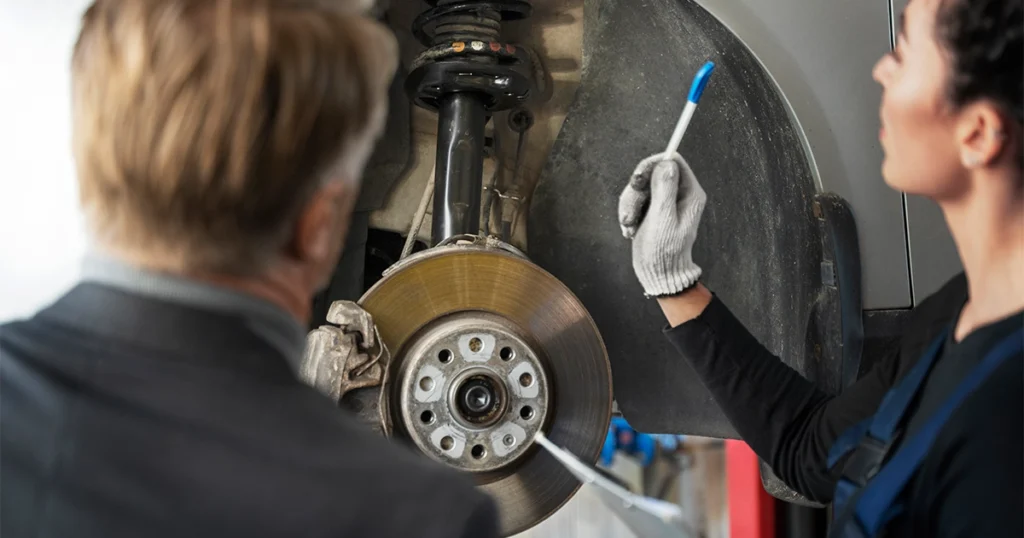
Brake rotors play a critical role in your vehicle’s braking system, directly affecting stopping power, safety, and overall driving performance. One of the most common questions drivers ask is how long do brake rotors last, especially when they start noticing vibrations, noises, or reduced braking efficiency. Visiting a trusted auto repair Houston shop can help ensure your rotors and braking system are inspected and maintained properly.
Determining the brake rotor lifespan depends on several factors, including driving habits, vehicle type, and maintenance practices. In this guide, we’ll break down what impacts the life of rotors, how to recognize signs of wear, and when it’s time to consider replacement to keep your car safe and road-ready.
Searching for “brake repair Houston” or “auto repair near me“? Trust Eric’s Car Care for quality brake service and long-lasting rotor performance.
What Are Brake Rotors and Why Are They Important?
Brake rotors, also known as brake discs, are flat, circular metal components attached to each wheel that work with your brake pads to slow down and stop your vehicle. When you press the brake pedal, the brake pads clamp onto the rotors, creating friction that reduces wheel speed. Because they handle intense heat and pressure every time you brake, rotors are essential to safe, consistent stopping performance.
Well-maintained brake rotors help ensure shorter stopping distances, smoother braking, and better overall control, making them a critical part of your vehicle’s safety system.
What is the Role of Brake Pads with Brake Rotors?
Brake pads and brake rotors work together to stop your car safely. Think of the rotor as a flat metal disc attached to your wheel, and the brake pads as thick, strong blocks that press against it. When you step on the brake pedal, the brake pads squeeze the rotors. This friction slows down the wheels, allowing your car to stop.
Brake pads are designed to wear down over time instead of the rotors, protecting the rotors from damage. Meanwhile, the rotors handle the heat created during braking, keeping your brakes working efficiently. When both parts are in good condition, your car stops smoothly and safely. But if the pads or rotors are worn out, you might feel vibrations, hear squeaking noises, or notice your car takes longer to stop.
This is why checking both brake pads and rotors regularly is so important for your safety.
Pro tip from Eric’s Car care: Always check your brake pads whenever you replace your brake rotors.
For reliable brake repair in Houston, trust Eric’s Car Care—schedule your brake rotor replacement today, take advantage of our free brake inspection, and enjoy peace of mind with our 36-month / 36,000-mile Tech Net warranty. Call us at 713-667-9293 to book your appointment today.
Factors That Affect Brake Rotor Lifespan
The lifespan of brake rotors isn’t the same for every driver or vehicle. Several factors can influence how quickly rotors wear out:
- Driving Habits: Frequent hard braking, aggressive driving, or stop-and-go traffic generates more heat and friction, which wears down rotors faster. Smooth, gentle braking helps extend their life.
- Type of Vehicle: Heavier vehicles, such as trucks and SUVs, put more stress on the braking system, causing rotors to wear out quicker than those on smaller cars.
- Brake Pad Quality: Low-quality or overly aggressive brake pads can accelerate rotor wear. High-quality pads paired with rotors help ensure longer service life.
- Driving Environment: Hilly areas, mountainous terrain, or city driving with constant stops can increase rotor wear. Additionally, exposure to moisture, road salt, or harsh weather can cause rust and corrosion.
- Maintenance Practices: Regular brake inspections and timely replacement of worn brake pads prevent unnecessary damage to rotors. Neglecting maintenance can shorten rotor lifespan significantly.
How Long Do Rotors Last?
On average, the lifespan of rotors usually falls between 30,000 and 70,000 miles. This range gives drivers a general expectation of when brake rotors may need attention, but it’s important to remember that rotor wear is gradual and doesn’t happen all at once.
Many vehicles can safely operate toward the higher end of this range when rotors remain within the manufacturer thickness specifications. However, as rotors wear down over time, they become thinner and less effective at dissipating heat, which can impact braking performance and comfort. Once rotors reach their minimum thickness or show signs of damage, replacement is necessary to maintain safe braking.
How Often to Replace Rotors?
The frequency of rotor replacement depends more on their condition than just mileage. On average, rotors may need replacement every 30,000 to 70,000 miles, but the exact timing can vary depending on how and where you drive.
At Eric’s Car Care, we often notice that brake rotors on vehicles driven mostly in the city tend to wear out around 30,000 miles due to frequent stop-and-go traffic.
On the other hand, drivers who spend more time on highways with steady speeds usually see their rotors last closer to the higher end of the typical lifespan range. Below are some of the common signs which indicate that your brake rotors need replacement:
- Vibrations or Pulsations While Braking
- Squeaking or Squealing Noises
- Visible Grooves or Scoring
- Soft or Spongy Brake Pedal
- Increased Stopping Distance
- Rust or Corrosion
Can Brake Rotors Be Resurfaced or Should They Be Replaced?
Yes, in some cases, brake rotors can be resurfaced (also called “turned” or “machined”) instead of replaced. Resurfacing removes a thin layer of metal from the rotor’s surface to eliminate minor grooves, warping, or uneven wear, restoring a smooth braking surface. This can be a cost-effective option if the rotors are still thick enough and free of cracks or severe damage.
However, not all rotors can be resurfaced. Each rotor has a minimum thickness specification set by the manufacturer. If the rotor is worn below this limit, resurfacing is unsafe because it weakens the rotor and reduces braking performance. Cracks, deep scoring, or severe warping also mean the rotor should be replaced rather than resurfaced.
Stay Safe on the Road with Proper Rotor Care
Being aware of how long brake rotors last and the typical brake rotor lifespan is crucial for safe driving. Regular inspections, timely replacements, and proper maintenance help ensure your brakes perform at their best and prevent costly repairs down the road.
At Eric’s Car Care, our ASE-Certified Technicians specialize in brake inspections, rotor replacements, and complete brake system maintenance. With years of experience and a commitment to quality, we make sure your vehicle stops safely every time. Schedule your next brake check or service at Eric’s Car Care and drive with confidence knowing your brakes are in expert hands.