
When it comes to maintaining a safe and responsive vehicle, knowing how to bleed brakes is an essential skill for any car owner or DIY mechanic. Over time, air in brakes can build up, reducing braking efficiency and making your vehicle feel spongy or unresponsive.
Bleeding brakes helps remove this trapped air, ensuring that your brake system functions smoothly and reliably. Whether you’re tackling routine maintenance or addressing a specific issue, learning the proper technique for bleeding brake lines can save you time, money, and provide peace of mind on the road.
If you’re searching for “brake repair Houston,” trust Eric’s Car Care, a Carfax Top-Rated Service Center 2024, for expert, reliable brake service that keeps you safe on the road.
What Is Brake Bleeding and How Does It Happen?
Bleeding brakes is the process of removing air bubbles from a vehicle’s brake system, specifically from the brake lines, calipers, or wheel cylinders. Brake systems are hydraulic, which means they rely on brake fluid to transfer the force from your brake pedal to the brake pads or shoes.
When air in brakes gets trapped in the lines, it compresses when you press the pedal, causing a spongy or soft brake feel and reducing braking efficiency. At Eric’s Car Care, we regularly see spongy brake pedals caused by air entering the system after brake pad or caliper replacement, which is why proper brake bleeding is essential after any brake repair.
How this happens:
- Routine maintenance or fluid replacement: Every time brake fluid is drained or replaced, air can enter the system.
- Leaks in the brake lines: A small crack or loose connection can allow air to enter.
- Brake system repairs: Replacing components like calipers, wheel cylinders, or the master cylinder can introduce air into the lines.
- Worn seals or damage: Over time, seals in the braking system may degrade, letting air in.
Without proper bleeding brake lines, your brakes may not respond as they should, which can be dangerous. Regularly checking and bleeding your brakes ensures consistent performance and safety on the road.
Signs Your Brakes Need Bleeding
Knowing the signs that your brakes need attention can prevent dangerous situations on the road. If you notice changes in how your brake pedal feels or how your car responds when stopping, it may be time to consider bleeding brakes. Here are the key indicators:
- Spongy or Soft Brake Pedal: If your brake pedal feels soft, sinks toward the floor, or requires extra effort to stop the car, it’s often a sign of air in brakes.
- Reduced Braking Power: When your car takes longer to stop than usual, it may mean the hydraulic pressure is compromised due to trapped air.
- Brake Pedal Pulsation: A pulsating or uneven brake pedal can indicate air bubbles in the brake lines or uneven brake fluid flow.
- Squeaky or Noisy Brakes: While noise can come from worn pads, unusual squeaks or grinding paired with soft braking may indicate fluid or air issues.
- Brake Warning Light: Some modern cars detect problems in the braking system; if the brake warning light is on, it could indicate low brake fluid or bleeding brake lines is needed.
- After Brake Repairs: Anytime you replace brake components like calipers, wheel cylinders, or master cylinders, air can enter the system, making bleeding brakes necessary.
Tools and Materials Needed
To properly perform bleeding brakes, you’ll need a few essential tools and materials to make the process safe, efficient, and effective. Here’s a complete list:
Tools:
- Brake Bleeder Kit: Includes tubing and a container to catch old brake fluid; some kits are vacuum or pressure-based.
- Wrenches: Usually a flare nut wrench or the correct size for your brake bleeder screws.
- Jack and Jack Stands: To safely lift and support your vehicle while working on the wheels.
- Lug Wrench: To remove the wheels and access the brake calipers or wheel cylinders.
- Brake Fluid Funnel: Helps pour brake fluid without spills.
Materials:
- Fresh Brake Fluid: Make sure it matches your vehicle manufacturer’s specifications (DOT 3, DOT 4, etc.).
- Clear Tubing: For connecting to the bleeder valve to safely route fluid into a container.
- Container: To catch old brake fluid and prevent spills.
- Rags or Paper Towels: To clean up any leaks or spills.
- Protective Gloves and Safety Glasses: Brake fluid is corrosive; safety is important.
Having all these tools and materials ready before starting ensures a smooth bleeding brake process and prevents mistakes like letting air back into the bleeding brake lines.
How to Properly Bleed Brakes
Before you start, it’s important to understand that bleeding brakes is the process of removing air in brakes that can make your brake pedal feel soft or spongy. Proper bleeding brake lines restores hydraulic pressure, ensuring your brakes respond quickly and safely.
Following the correct steps helps prevent fluid leaks, protects your braking system, and keeps your vehicle performing at its best.
Step 1: Prepare Your Vehicle
- Park on a flat surface and engage the parking brake.
- Place wheel chocks behind the wheels to prevent rolling.
- Loosen lug nuts if you’re removing the wheels to access bleeder screws.
- Safely raise the vehicle with a jack and support it with jack stands.
Step 2: Check and Fill Brake Fluid
- Open the brake fluid reservoir under the hood.
- Top up with fresh brake fluid to the MAX line, keeping it full throughout prevents more air in brakes.
Step 3: Bleeding Sequence
- Always start with the wheel farthest from the master cylinder:
- Right rear
- Left rear
- Right front
- Left front
- Right rear
(This order helps push out old fluid and air efficiently.)
Step 4: Locate Bleeder Screw
- Find the bleeder screw on the brake caliper (disc brakes) or wheel cylinder (drum brakes).
- Remove the rubber cap and fit a box‑end or offset wrench for better access.
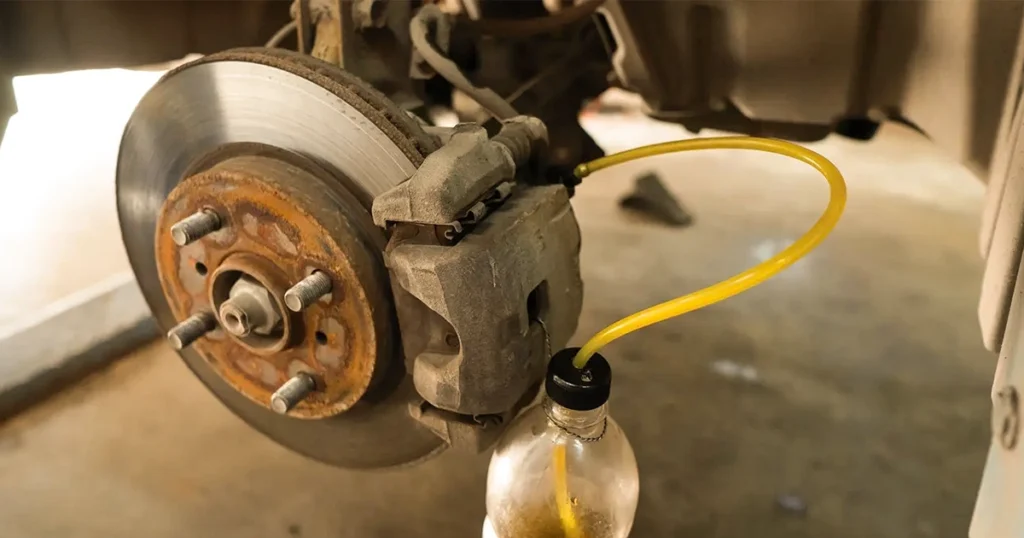
Step 5: Attach Tubing & Catch Bottle
- Attach clear plastic tubing to the bleeder screw.
- Place the other end into a container partially filled with brake fluid.
- Hold the bottle above the bleeder screw so fluid flows down without air returning.
Step 6: Bleeding the Brake
- Have your helper pump the brake pedal slowly 3–5 times, then hold it down firmly.
- With the pedal held, loosen the bleeder screw slightly (about 1/4 turn). Fluid and trapped air will flow out through the tube.
- Tighten the screw before your helper releases the pedal.
Step 7: Repeat Until No Air
- Look for air bubbles in the fluid inside the tubing.
- Continue the pump → hold → loosen → tighten cycle until only clear, bubble‑free fluid comes out.
Step 8: Move to the Next Wheel
- Repeat steps 4–7 for each wheel in the proper sequence.
- Keep topping up the brake fluid reservoir so it never drops below the minimum.
Step 9: Finish Up
- Once all wheels are bled, ensure bleeder screws are secure but not over‑tightened.
- Clean any spilled brake fluid with brake cleaner and a clean rag (brake fluid can damage paint).
Step 10: Pedal Test & Final Checks
- Press the brake pedal; it should feel firm and responsive, without a spongy sensation.
- Check around all bleeder screws for leaks and tighten gently if needed.
- Lower the car, reinstall wheels (if removed), and do a slow, safe test drive to confirm braking performance.
Important Tips:
- Never let the master cylinder reservoir run dry during bleeding, this introduces more air.
- If you struggle getting the pedal firm, repeat the bleeding cycle, sometimes stubborn bubbles take extra passes.
- For one‑person bleeding, consider a vacuum or pressure bleeder kit; these tools can make the process easier.
When It Comes to Brake Safety, Eric’s Car Care Delivers
Proper maintenance is key to safe driving, and knowing how to bleed brakes ensures your vehicle’s braking system is free from air in brakes and working at its best. Whether you’re a DIY enthusiast or prefer professional help, bleeding brakes correctly can prevent spongy pedals, improve safety, and extend the life of your brake system.
For reliable, professional brake service, trust Eric’s Car Care.
At Eric’s Car Care, we have ASE-Certified Technicians, offer a 36-month / 36,000-mile Tech Net warranty, and use OEM or high-quality parts to ensure every brake service meets the highest standards. Our experienced technicians handle all aspects of brake maintenance, from bleeding brake lines to full brake repairs, ensuring your car stops safely every time. Visit Eric’s Car Care today and drive with confidence!