
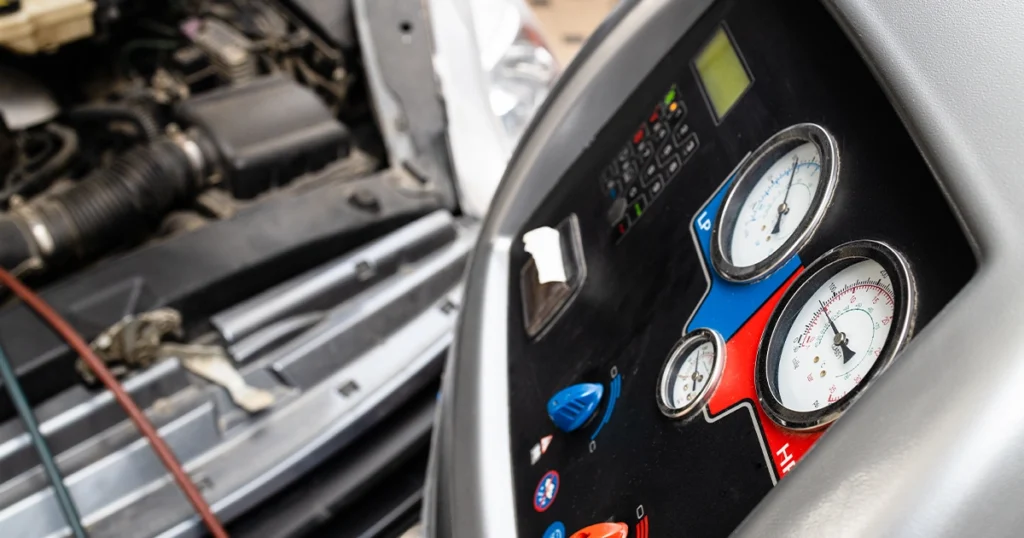
Many drivers wonder whether turning on the AC actually affects fuel efficiency, especially with rising fuel costs. A common question is does air conditioner in cars use gas, or is it just a myth passed around by mechanics and car enthusiasts? In reality, your vehicle’s air conditioning system does rely on engine power, which leads many to ask if AC wastes gas during everyday driving.
In this blog, we’ll break down how car AC systems work, whether car AC uses gas, and share practical tips to reduce gas consumption when using AC, along with when it’s best to trust professional auto repair Houston experts. If your system isn’t performing as it should, timely AC repair Houston services can restore efficiency, improve cooling, and help protect your vehicle from unnecessary strain.
How Does the Air Conditioner Work in a Car?
A car’s air conditioner works by removing heat and moisture from the air inside the cabin, then circulating cool air to keep you comfortable. Below is a simple, step-by-step breakdown of how the system works.
1. Compressor
The compressor is the heart of the AC system. Powered by the engine through a belt, it compresses the refrigerant gas, increasing its pressure and temperature. This process is what allows the system to move heat efficiently, and it’s also why using the AC adds extra load to the engine.
Read Related Posts:
Does running the car AC with a broken compressor damage your vehicle?
6 signs your car’s AC compressor Is failing
What are the causes of car AC compressor failure?
2. Condenser
Once compressed, the hot, high-pressure refrigerant flows into the condenser, which is usually located in front of the radiator. As outside air passes over it, the refrigerant releases heat and changes from a gas into a liquid.
3. Receiver-Drier / Accumulator
The liquid refrigerant then passes through the receiver-drier or accumulator, depending on the type of AC system. This component removes moisture and filters out debris from the refrigerant. By keeping the refrigerant clean and dry, it protects vital components like the compressor and expansion valve from damage.
4. Expansion Valve or Orifice Tube
The liquid refrigerant then travels to the expansion valve or orifice tube. Here, the pressure drops suddenly, causing the refrigerant to cool rapidly before entering the next stage.
5. Evaporator
The cold refrigerant moves into the evaporator inside the dashboard. Warm air from the cabin blows over the evaporator coils, allowing the refrigerant to absorb heat. This step also removes moisture from the air, helping prevent foggy windows.
6. Air Vents
Finally, the cooled, dehumidified air is pushed back into the cabin through the vents. The refrigerant then returns to the compressor, and the cycle repeats.
Final Takeaway: Your car’s AC doesn’t actually create cold air. Instead, it removes heat from the cabin and releases it outside, keeping the interior cool, dry, and comfortable while you drive.
Read more: Car AC components and their functions
Does Car AC Use Gas?
Yes, a car’s AC does use gas, but not in the way many people think.
Your car’s air conditioner doesn’t burn gas directly. Instead, it’s powered by the engine, which does run on fuel. When you turn the AC on, the compressor puts extra load on the engine. To handle that extra work, the engine burns more gas.
So:
- AC ON → engine works harder
- Engine works harder → more fuel is used
That’s why fuel efficiency drops slightly when you use the AC, around 5-10% more, especially during city driving or stop-and-go traffic.
However, at highway speeds, using the AC can actually be more fuel-efficient than driving with windows down, because open windows create wind resistance that makes the engine work harder.
If you’re facing problems with your car’s AC and searching for auto repair near me, trust Eric’s Car Care for expert AC repair in Houston, handled by ASE-Certified Technicians and recognized with Neighborhood FAVE Awards.
Does Car AC Use Gas When Idling?
Yes, car AC uses gas when idling because the engine is still running. When you turn the AC on, the compressor needs power, which comes from the engine. This extra load makes the engine burn more fuel, even though the car isn’t moving. As a result, idling with the AC on uses more gas than idling with the AC off.
Does Car AC Use Gas in Hybrid and Electric Cars?
Yes, car AC works differently in hybrid and electric cars, and it affects energy use in different ways.
In hybrid cars, the AC can run on the electric motor, the gas engine, or both. When the battery has enough charge, the AC may run electrically without using gas. But if the battery is low, the gas engine turns on, and that’s when fuel is used.
In electric cars (EVs), there is no gas engine at all. The AC runs completely on electricity from the battery, so it does not use gas, but it can reduce driving range slightly.
Read more: Why AC works better in electric cars
Tips to Reduce Gas Consumption When Using Car AC
Using your car’s air conditioner doesn’t mean you have to waste fuel. With a few smart habits, you can stay comfortable while keeping fuel consumption under control. Here are some easy tips to help you save fuel when the AC is on:
- Park in the shade whenever possible. A cooler cabin means the AC doesn’t have to work as hard.
- Vent hot air first by opening windows for a minute before turning on the AC, especially after parking in the sun.
- Use AC wisely at low speeds. At city speeds, try a moderate fan setting instead of max AC when possible.
- Keep windows up on highways. Open windows create drag and can waste more fuel than using the AC.
- Maintain your AC system. A clean cabin air filter and properly serviced AC run more efficiently and use less fuel.
- Avoid unnecessary idling with AC on. Turn the engine off if you’re stopped for a long time.
Read Related: How to keep your car’s AC cool and comfy this summer
Keep Your Car Comfortable With Our Certified AC Specialists
Now you know the answer to: Does the air conditioner in cars use gas? It doesn’t burn fuel directly, but it does make your engine work harder, which can increase fuel use. Keeping your AC system in top shape helps it run efficiently, keeps you comfortable, and prevents unnecessary strain on your vehicle.
If your AC isn’t cooling properly or you want peace of mind before the heat hits, trust Eric’s Car Care for professional AC repair in Houston.
Our Certified AC Specialists handle everything from compressors and condensers to heaters and related components, and most repairs are backed by a 36-month or 36,000-mile TechNet warranty (whichever comes first). Stay cool, drive confidently, and let our experts take care of your car’s AC system.