
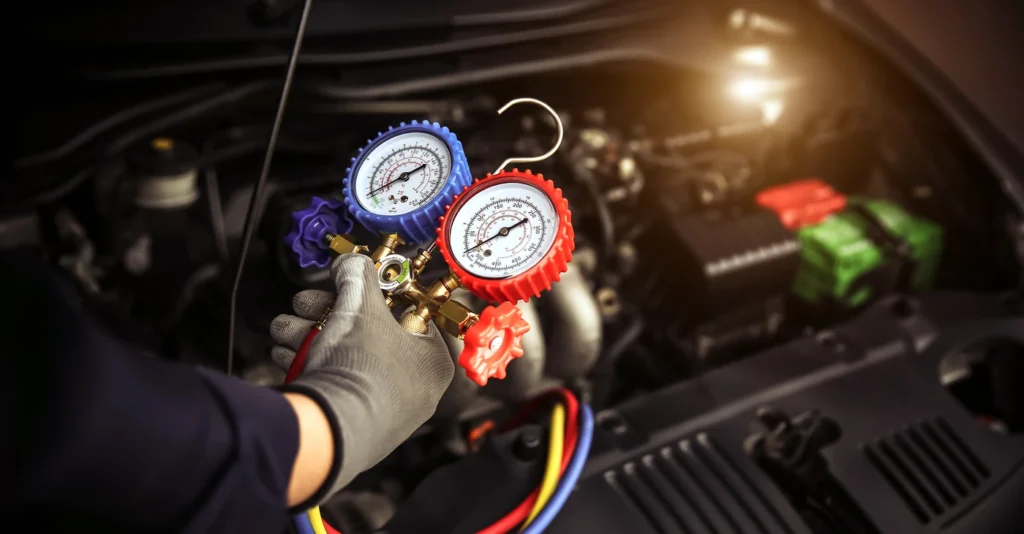
Testing an AC compressor on a car helps determine whether your air conditioning system is functioning properly or if a component has failed. The compressor is responsible for circulating refrigerant through the AC system, and when it stops working, you may notice weak airflow, warm air from the vents, unusual noises, or the AC clutch failing to engage. Basic testing usually includes checking the compressor clutch, inspecting fuses and relays, listening for abnormal sounds, and using a multimeter to test electrical connections and voltage supply.
You can also inspect for visible refrigerant leaks, damaged wiring, or oily residue around the compressor area, as these are common signs of AC system problems. While some diagnostic steps can be performed at home, advanced testing and refrigerant handling should be left to professionals for safety and accuracy. If your AC still blows warm air after basic checks, professional Auto Repair Houston services can properly diagnose compressor issues and recommend the right repair solution.
What Is an AC Compressor?
The AC compressor is the heart of your car’s air conditioning system. It pressurizes refrigerant and circulates it through the condenser and evaporator, enabling cool air to reach your cabin. If the compressor fails, the AC will blow warm air or stop working entirely. Before replacing expensive components, you can perform several checks to determine whether the compressor or another part of the system is the problem. Understanding the common causes of car AC compressor failure can also help you diagnose cooling problems before the system completely stops working.
How Does a Car AC Compressor Work?
A car AC compressor is driven by the engine via a serpentine belt and clutch assembly. When you turn on the air conditioning, the clutch engages and spins the compressor. Inside, pistons or scroll mechanisms compress low-pressure refrigerant gas into a high-pressure, high-temperature gas that moves to the condenser. From a practical standpoint, if the clutch doesn’t engage, the compressor will not pressurize the system and you won’t get cold air.
Signs of a Bad Car AC Compressor
- Weak or warm airflow from the vents even when the AC is set to max.
- Grinding, squealing, or clunking noises from the compressor area.
- Visible refrigerant leaks or oil residue around the compressor.
- AC clutch not engaging when the system is on.
- Intermittent cooling, sometimes cold, sometimes not.
If you spot these signs and searches likecar ac repair near me or ac auto repair near me bring up options, it’s often worth getting a professional diagnosis. For local help, consider Eric’s Car Care or check Auto Repair near me. These symptoms are some of the most common signs of a failing AC compressor in a car and should be inspected before the damage worsens.
How to Check AC Compressor?
Checking your car’s AC compressor involves a combination of visual inspection, electrical testing, and performance checks. These steps help identify whether the compressor is engaging properly, leaking refrigerant, or suffering from internal damage. Performing basic diagnostics early can prevent larger AC system failures and costly repairs.
- Safety first
- Park on level ground, turn off the engine, and let components cool. Wear gloves and eye protection. Never service refrigerant systems yourself unless certified — mishandling refrigerant is dangerous and illegal in many areas.
- Visual inspection
- Look for damaged hoses, oily residue (indicating leaks), loose belts, and damaged wiring to the compressor clutch.
- Clutch engagement test
- Start the engine and set the AC to the coldest setting with the fan on. Observe the compressor clutch (a small circular plate at the front of the compressor). It should spin when the AC is turned on; if the outer pulley spins and the center clutch does not, the clutch is not engaging.
- If the clutch does not engage during testing, you may be dealing with a car AC compressor not turning on due to electrical or refrigerant-related issues.
- Check fuses and relays
- Locate the AC fuse and relay in your fuse box. Replace any blown fuses and swap the AC relay with a similar one to test function.
- Listen and feel
- Unusual noises often point to internal compressor failure. Also, if vents blow cold air for a short time then warm up, the compressor might be cycling on and off due to low refrigerant or internal damage.
- Pressure test (requires gauges)
- Attaching a set of manifold gauges to low and high side service ports will indicate system pressures. Low pressure on both sides often means low refrigerant; frozen evaporator or extremely high pressure can signal a failing compressor.
How To Test Car AC Compressor With Multimeter?
A multimeter is one of the most effective tools for diagnosing electrical problems in a car AC compressor. It helps determine whether the compressor clutch is receiving power, if the clutch coil is functioning correctly, and whether there are grounding or continuity issues within the system. These tests can help identify compressor-related faults before replacing expensive components unnecessarily.
- Test the clutch coil resistance
- Locate the electrical connector to the compressor clutch and disconnect it.
- Set your multimeter to the ohms (Ω) setting.
- Place the probes on the clutch coil terminals. Typical clutch coil resistance ranges from about 2 to 5 ohms but consult your vehicle’s service manual for exact specs.
- If the multimeter reads infinite resistance (open circuit) or very low (short), the clutch coil is likely bad and the compressor or clutch assembly may need replacement.
- Check for power at the connector
- With the engine running and AC on, use the multimeter in DC volts mode to check for 12V supply at the clutch connector. If there’s 12V but the clutch doesn’t engage, the clutch is faulty. If there’s no voltage, trace back to the relay, AC pressure switches, or climate control module.
- Inspect grounds and continuity
- Ensure proper grounding and continuity between the clutch assembly and vehicle ground. Poor ground can prevent clutch engagement.
If these tests still don’t clearly identify the issue, it’s best to get a professional diagnosis and Claim Your FREE A/C Inspection before replacing major components unnecessarily.
When to Call a Professional?
If your multimeter checks indicate the clutch coil is fine but the compressor still won’t engage, or if pressure tests suggest internal damage, you should contact a qualified shop for car AC repair. Refrigerant handling and compressor replacement require specialized tools and certification. For reliable local service, search ac auto repair near me for example, Eric’s Car Care provides comprehensive diagnostics and AC service.