
If you have ever wondered how a clutch works, understanding the basics can help you spot problems before they turn into expensive repairs.
The clutch is one of the most important parts of a vehicle’s transmission system, especially in manual cars, helping your car drive smoothly and shift gears properly.
If you drive a European vehicle and notice hard shifting, slipping, or unusual noises, professional European car repair Houston services can help diagnose issues early and keep your vehicle performing at its best.
In this blog, we’ll explain what a clutch is, what it does, and the signs that may indicate it needs repair.
What Is a Clutch in a Car?
A clutch is a mechanical component that connects and disconnects the engine from the transmission. In simple words, it controls the flow of engine power to the wheels.
When you press the clutch pedal, the engine temporarily disconnects from the gearbox, allowing you to shift gears. When you release the pedal, power reconnects and moves the vehicle forward.
Without a clutch, changing gears in a manual transmission vehicle would feel rough and could seriously damage the transmission system.
What Does a Clutch Do?
The clutch has one main job: control power transfer between the engine and transmission.
Here’s what it helps your vehicle do:
- Enables smooth gear changes
- Prevents engine stalling when stopping
- Helps the car start moving gradually
- Reduces wear on transmission components
Imagine trying to switch bicycle gears while pedaling hard without easing pressure, it would feel rough. A clutch works similarly by creating a smooth transition between gears.
What Parts Make Up a Clutch?
To better understand how a clutch works, it helps to know the key parts that make up the system. A car clutch is not a single component—it is a group of parts working together to transfer engine power to the transmission and help the driver change gears smoothly.
- Clutch Disc: The clutch disc (or clutch plate) transfers engine power to the transmission using friction. Over time, wear and heat can cause slipping or poor clutch performance.
- Flywheel: The flywheel connects to the engine and provides a smooth surface for the clutch disc to engage. A damaged flywheel may cause vibrations or rough gear shifts.
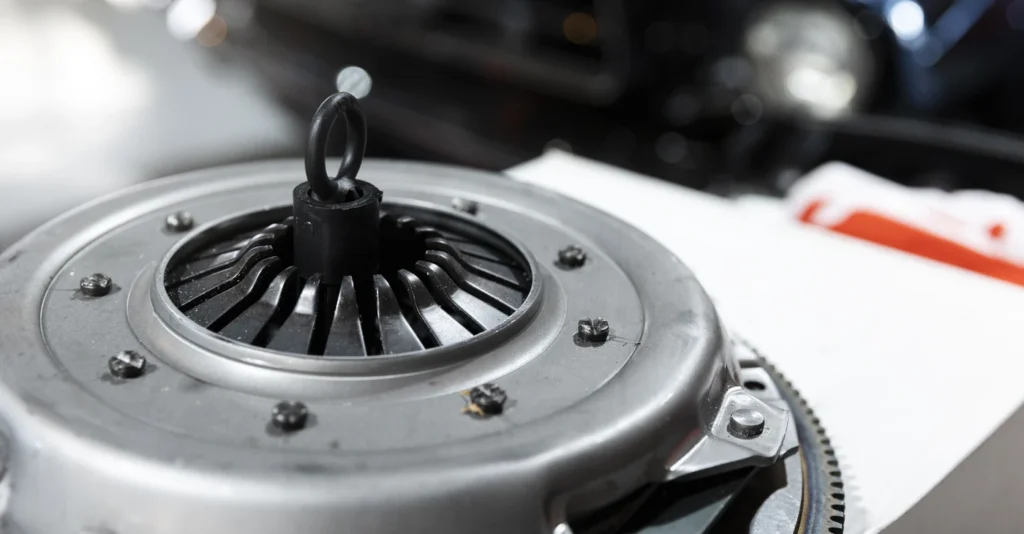
- Pressure Plate: The pressure plate keeps the clutch disc pressed against the flywheel to transfer power. When weakened, it can lead to poor acceleration or shifting problems.
- Release Bearing (Throw-Out Bearing): The release bearing helps disengage the clutch smoothly when the pedal is pressed. A faulty bearing often causes squealing or grinding noises.
- Clutch Pedal and Linkage: The clutch pedal activates the clutch system to disconnect the engine from the transmission for gear changes. A stiff or soft pedal can indicate clutch or hydraulic issues.
How Does a Clutch Work in a Car?
A clutch works by temporarily disconnecting engine power so the gearbox can safely change gears. Once the new gear is selected, the clutch reconnects power to the wheels, helping the vehicle move efficiently.
When You Press the Clutch Pedal
When you press the clutch pedal, the clutch system disengages. This means the clutch disc separates from the flywheel, temporarily stopping power transfer from the engine to the transmission.
At this point:
- The pressure plate releases tension on the clutch disc
- Engine power is momentarily disconnected
- You can safely switch gears without grinding or damaging the gearbox
This process is especially important when stopping, starting, or shifting between speeds. Without a properly working clutch, changing gears would feel rough and could damage the transmission system over time.
When You Release the Clutch Pedal
As you slowly release the clutch pedal, the clutch disc reconnects with the flywheel. This re-engages the connection between the engine and transmission, sending power back to the wheels.
During this stage:
- The pressure plate presses the clutch disc against the flywheel
- Engine power flows through the transmission
- The car moves in the selected gear smoothly
Releasing the clutch too quickly can cause jerking or stalling, while smooth engagement allows better control and vehicle performance.
This step-by-step process happens every time you change gears in a manual car. A healthy clutch system ensures smooth acceleration, efficient power transfer, and easier gear shifts.
However, if you notice slipping gears, grinding noises, vibrations, or a soft clutch pedal, it may indicate clutch wear or transmission issues.
In these situations, getting your vehicle inspected by an auto repair Houston professional can help diagnose problems early and prevent more expensive drivetrain repairs later.
Where Is the Clutch Located in a Car?
The clutch sits between the engine and transmission. In manual vehicles, you will also find the clutch pedal on the far left side of the driver’s footwell. Because the clutch is hidden within the transmission housing, diagnosing issues often requires a professional inspection.
Manual vs Automatic Transmission: What’s the Difference?
One of the biggest differences between manual and automatic vehicles is how they manage gear changes.
1. Manual Transmission
- Requires a clutch pedal
- Driver shifts gears manually
- Offers greater driving control
2. Automatic Transmission
- Changes gears automatically
- No clutch pedal for the driver
- Easier for stop-and-go traffic
Many drivers ask whether automatic cars have clutches. The answer is yes, most automatics still use clutch systems internally, though the driver does not manually operate them.
How Does a Dual-Clutch Automatic Transmission Work?
A dual-clutch transmission (DCT) uses two separate clutches to improve efficiency and speed.
One clutch controls odd gears (1st, 3rd, 5th), while the other controls even gears (2nd, 4th, 6th). This setup allows gear changes to happen faster with minimal interruption in power delivery.
That is why many luxury European cars and performance vehicles use dual-clutch systems for quicker acceleration and smoother shifts.
Common Signs of a Bad Clutch
A failing clutch usually shows warning signs before it stops working completely.
Watch for these symptoms:
- Difficulty shifting gears: If changing gears feels stiff or rough, your clutch may not be disengaging properly.
- Burning smell while driving: A burning odor can happen when the clutch overheats due to excessive friction or wear.
- Slipping gears during acceleration: If the engine revs higher but the car struggles to gain speed, the clutch may be slipping.
- Vibrations in the clutch pedal: Unusual shaking or vibrations can point to worn clutch components or flywheel issues.
- Grinding or unusual noises: Squealing, grinding, or rattling sounds when pressing the clutch pedal may indicate bearing or pressure plate problems.
Need Clutch Repair in Houston? Visit Eric’s Car Care
Now that you understand how a clutch works, it’s easier to spot early signs of trouble before they turn into costly repairs. If your car is slipping gears, hard to shift, or making grinding noises, it may need professional inspection.
For trusted service in Houston and West University Place, visit Eric’s Car Care. With 50+ years of experience and ASE-certified technicians, they provide reliable clutch diagnosis and repair for all vehicle types, including European cars.