
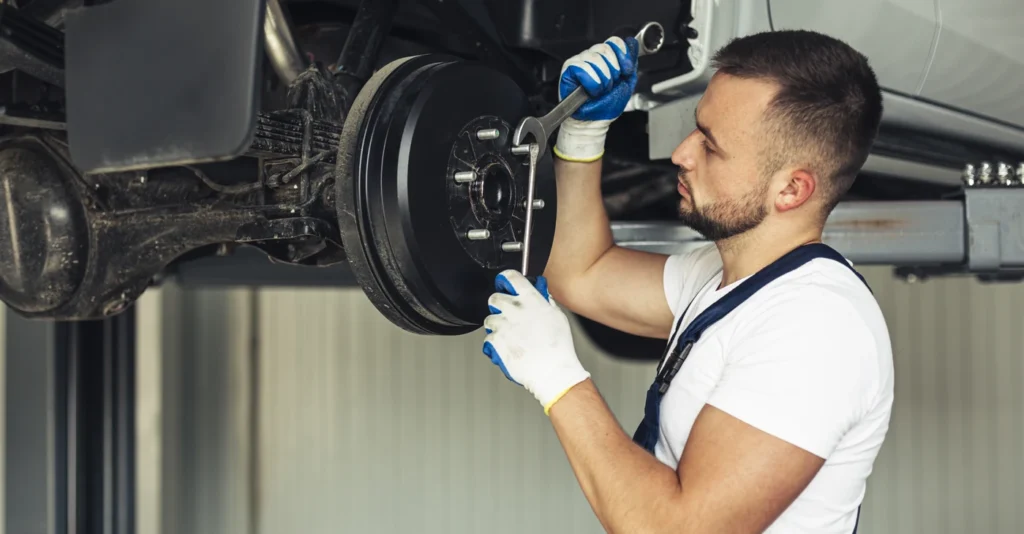
Keeping your vehicle safe on the road starts with understanding the condition of your brakes, and a thorough brake rotor inspection is a crucial part of that process. Many car owners overlook the importance of inspecting brake rotors regularly, and they don’t realize that simply looking at a brake rotor can be dangerously misleading. Worn or damaged rotors can lead to reduced braking performance and costly repairs.
In this blog, we’ll walk you through everything you need to know to check brake rotors effectively, helping you maintain smooth, reliable braking, avoid unexpected issues on the road, and understand when it’s time to visit a brake repair Houston shop for professional rotor replacement.
If you’re searching for auto repair near me, visit Eric’s Car Care, a neighborhood FAVE Awards trusted auto repair Houston shop.
Tools You’ll Need for a Brake Rotor Inspection
When inspecting brake rotors, having the right tools makes the process easier, safer, and more accurate. For a thorough brake rotor inspection, you’ll typically need:
- Jack and Jack Stands: To safely lift and support your vehicle while you access the wheels and rotors.
- Lug Wrench or Impact Wrench: To remove the wheels for a closer look at the rotors.
- Flashlight: Proper lighting helps you spot cracks, grooves, or uneven wear on the rotor surface.
- Micrometer or Vernier Caliper: For measuring rotor thickness and ensuring it meets manufacturer specifications.
- Dial Indicator: Useful for checking rotor runout, which detects warping or uneven surfaces.
- Brake Cleaner and Rag: To clean the rotor surface before inspection for a more accurate assessment.
- Gloves and Safety Glasses: Essential safety gear when working around brakes.
- Wire Brush: Helps remove rust, dirt, or debris from the rotor surface, making it easier to see grooves, cracks, or uneven wear during brake rotor inspection.
- Straight Edge: Essential for checking rotor flatness. Placing a straight edge across the rotor surface can reveal warping or uneven spots that aren’t always visible to the naked eye.
How to Inspect Brake Rotors – Step by Step
Inspecting your brake rotors may sound complicated, but with a careful, step-by-step approach, a thorough brake rotor inspection is straightforward. Follow this journey from start to finish to understand the health of your brakes and ensure safe driving.
Step 1: Get Ready – Safety First
Before touching your car, make sure it’s on a flat surface. Engage the parking brake and place wheel chocks behind the opposite wheels to prevent rolling. Gather your tools: jack, jack stands, lug wrench, flashlight, micrometer, straight edge, wire brush, and safety gloves. With everything ready, you’re set to start a thorough brake rotor inspection.
Step 2: Lift the Car and Remove the Wheels
Use the jack to lift the car and secure it on jack stands. Then, remove the wheel to get full access to the rotor. This step is crucial; you can’t properly inspect your rotors without seeing both sides clearly.
Step 3: Clean the Rotors
Rotors often have dirt, brake dust, or surface rust that can hide problems. Take a wire brush and brake cleaner to remove grime. A clean rotor makes it easy to spot scratches, grooves, or cracks during brake rotor inspection.
Step 4: Look Closely – Visual Inspection
Now it’s time to examine the rotor carefully. Check both the inner and outer faces:
- Look for deep grooves or scoring lines. Small scratches are normal, but deep grooves mean wear.
- Check for cracks or heat marks – these appear from excessive braking or overheating.
- Notice rust or corrosion. A little rust is fine, but heavy buildup can affect braking.
- Watch for bluish patches, a sign the rotor has overheated and developed hard spots.
Step 5: Check the Pad Contact Pattern
Next, see how the brake pads have been interacting with the rotor. Uneven pad marks indicate problems like misaligned calipers, warped rotors, or uneven wear. A healthy rotor will show a smooth, even pattern across the surface. This step gives insight into how your brakes are functioning as a system, not just the rotor alone.
Step 6: Feel for Ridges and Roughness
After cleaning, gently run your finger along the rotor’s edge. Noticeable ridges or a bumpy surface are warning signs that the rotor may be near the end of its life. This tactile check helps you catch problems that aren’t always visible.
Step 7: Measure Thickness Accurately
Even if the rotor looks fine, it may be too thin. Use a micrometer or thickness gauge to measure several points on the rotor, avoiding slotted areas. Compare your readings to the manufacturer’s minimum specifications. Rotors below the minimum thickness must be replaced to maintain safe braking.
Step 8: Check for Warping (Runout)
Rotors can be uneven, even if thick enough. Place a straight edge across the rotor or use a dial indicator to check for warping. If the rotor rocks or gaps appear as it spins, it is likely warped and should be replaced. Warped rotors can cause vibrations while braking.
Step 9: Look for Contamination
Examine the rotor surface for grease, brake fluid, or other contaminants. Contamination reduces friction and can affect stopping power, often signaling a problem in the brake system, like a leaking caliper.
Step 10: Test Your Brakes on the Road
Once everything is back together, take the car for a slow, careful drive. Pay attention to:
- Pulsations in the brake pedal
- Vibrations in the steering wheel
- Squealing, grinding, or unusual noises
Important Tips & Facts You Should Know:
- Follow the “2nd pad change = rotor replace” guideline.
- Perform a brake rotor inspection at least every 10,000 miles.
- Rotors can fail with as little as 1mm of material loss; even minor wear is critical.
If you notice any of these, it may indicate warped rotors, uneven wear, or other brake issues that need professional attention.
Read Related: When to replace brake rotors
Tips to Extend Brake Rotor Lifespan
To get the most out of your braking system, regular care is just as important as brake rotor inspection. Simple habits and maintenance can significantly extend the life of your rotors, keeping your drives smoother and safer. Follow these practical tips to protect your brake rotors for the long run:
- Avoid Hard Braking When Possible: Frequent sudden stops generate excessive heat, which can warp rotors over time. Try to brake gradually and anticipate stops to reduce stress on your rotors.
- Don’t Ride the Brakes: Keeping your foot on the brake pedal while driving slowly (riding the brakes) generates constant friction and heat. Use engine braking or release the pedal when possible.
- Keep Brake Pads in Good Condition: Worn-out brake pads can damage rotors quickly. Regularly check the pad thickness and replace them before they become too thin. Even a brake rotor inspection won’t help if pads are already causing scoring.
- Avoid Overloading Your Vehicle: Carrying heavy loads increases braking stress and heat, which accelerates rotor wear. Follow your vehicle’s recommended load limits.
- Clean Rotors and Calipers Regularly: Brake dust, dirt, and rust can build up on rotors and reduce their lifespan. Cleaning with brake cleaner and gently brushing off debris helps maintain smooth rotor surfaces.
- Allow Brakes to Cool After Heavy Use: After driving down long hills or towing, give your brakes a few minutes to cool before parking. Rapid cooling while hot can cause warping.
- Perform Regular Brake Rotor Inspections: Routine brake rotor inspections help catch early signs of wear, scoring, or warping. Replacing or resurfacing rotors when needed prevents further damage and extends their life.
- Use Quality Parts: Invest in high-quality rotors and pads. Cheap rotors may wear faster, warp easily, or cause uneven braking. OEM or high-quality aftermarket parts last longer.
Read Related: How long do brake rotors last
Keep Your Brakes Safe with Eric’s Car Care
A regular brake rotor inspection can prevent costly repairs and keep your vehicle stopping smoothly. Maintaining your brakes not only ensures safety but also extends the life of your rotors and pads. For professional care, you can trust us. At Eric’s Car Care, our ASE-Certified technicians provide expert brake repair in Houston, including high-quality brake rotor replacement. Most of our brake services, from pads to rotors and related components, are backed by a 36-month or 36,000-mile TechNet warranty, giving you peace of mind and reliable performance every time.