
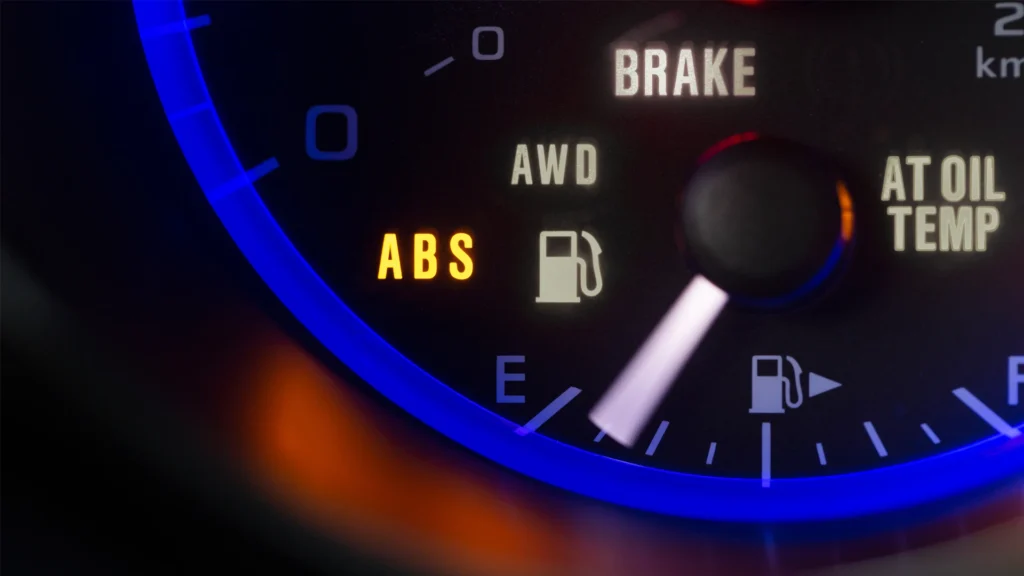
The ABS warning light indicates that your vehicle’s anti-lock braking system has detected a problem or may not be operating as intended. Depending on the vehicle, the warning light may appear as “ABS” or as a symbol associated with the anti-lock braking system. When the light comes on, the vehicle’s regular brakes may still work, but the anti-lock function may be unavailable.
Several issues can trigger the ABS warning light, including a faulty wheel-speed sensor, damaged wiring, low brake fluid, problems with the ABS module, or other braking-system faults. If the warning light remains illuminated, professional auto repair Houston services can inspect the system and identify the cause.
What Is the ABS System?
ABS stands for anti-lock braking system. It is designed to help prevent the vehicle’s wheels from locking during hard braking, allowing the driver to maintain greater steering control while braking.
The system uses wheel-speed sensors and electronic controls to monitor wheel movement. If the system detects that a wheel is about to lock, it can adjust brake pressure at that wheel.
ABS does not eliminate the need for safe driving or shorten braking distances in every situation. Its purpose is to help maintain wheel control during certain braking conditions.
What Does the ABS Warning Light Mean?
When the ABS warning light turns on, it generally means that the vehicle has detected a fault within the anti-lock braking system. The exact cause cannot be determined from the warning light alone.
Possible causes include:
- Faulty Wheel-Speed Sensor: A damaged or malfunctioning sensor may provide incorrect wheel-speed information to the ABS system.
- Damaged Wiring: Broken, corroded, or disconnected wiring can interfere with communication between ABS components.
- Low Brake Fluid: A low fluid level can trigger braking-system warnings, depending on the vehicle.
- ABS Module Problems: A fault within the ABS control module can prevent the system from operating correctly.
- Electrical Problems: Battery, charging-system, fuse, or other electrical issues can sometimes contribute to warning-light activation.
- Hydraulic Brake Problems: Issues within the braking system may affect ABS operation or trigger related warnings.
Why Is My ABS Light On?
The ABS light may remain illuminated because the vehicle’s computer has detected a problem that affects the anti-lock braking system. In some cases, the issue may be relatively simple, such as a damaged sensor or wiring problem. Other situations may require more extensive diagnosis.
The warning light may appear after:
- Driving through deep water or severe weather.
- A wheel-speed sensor becomes damaged or contaminated.
- Brake components have been serviced.
- Wiring or electrical connections develop a fault.
- Brake fluid becomes low.
- The vehicle experiences a battery or charging-system problem.
- An ABS component fails.
If the light appears only temporarily and then turns off, the system may have detected an intermittent issue. Even so, recurring warning lights should not be ignored.
Can You Drive With the ABS Warning Light On?
Whether you can continue driving depends on which braking systems are affected and whether the vehicle exhibits other braking problems. When only the ABS warning light is illuminated, the conventional braking system may continue to operate, but the anti-lock function may be disabled.
You should take extra care and have the system inspected as soon as practical. If the ABS light appears together with a red brake warning light, or if the brake pedal feels abnormal, braking performance changes, fluid is leaking, or the vehicle is difficult to stop, continuing to drive may be unsafe.
In these situations, stop in a safe location and seek professional assistance rather than assuming the vehicle can be driven normally.
Can Low Brake Fluid Cause the ABS Light to Come On?
Low brake fluid can contribute to brake-system warning lights, although the exact warning behavior varies between vehicles. Brake fluid levels can decrease for different reasons, including normal changes in brake-pad wear or a leak in the braking system.
Do not simply add fluid and ignore a low level. If the fluid is significantly below the recommended level, a technician should determine why it is low. A brake-fluid leak can reduce braking performance and requires prompt attention.
Can a Bad Wheel-Speed Sensor Cause the ABS Light?
Yes, a faulty wheel-speed sensor is a common potential cause of an ABS warning light. These sensors provide information about wheel rotation to the vehicle’s ABS and stability-control systems.
If a sensor becomes damaged, contaminated, disconnected, or otherwise malfunctions, the system may receive inaccurate information. This can cause the ABS warning light to illuminate and may affect other electronic safety systems that rely on wheel-speed information.
What Happens When the ABS System Fails?
When an ABS fault occurs, the anti-lock function may be disabled. The vehicle may still have conventional braking capability, but it may not provide the same wheel-lock prevention function during hard braking.
Depending on the vehicle and the underlying fault, other systems such as traction control or electronic stability control may also be affected because they can share information from the same sensors and control systems.
A warning light does not necessarily mean that all braking ability has been lost. However, the underlying problem should be diagnosed rather than assuming the system will correct itself.
ABS Light vs. Brake Warning Light
The ABS warning light and the red brake warning light can indicate different problems, although the exact symbols and warning behavior vary by vehicle.
The ABS light generally relates to the anti-lock braking system. The red brake warning light may indicate issues such as the parking brake being engaged, low brake fluid, or another brake-system concern.
If both warning lights appear at the same time, the situation deserves particular attention because there may be a problem affecting the broader braking system. Check your vehicle’s owner’s manual for the specific meaning of its warning indicators.
How Is an ABS Warning Light Diagnosed?
Diagnosing an ABS warning light usually involves more than simply checking the dashboard. A technician may use a diagnostic scanner capable of communicating with the vehicle’s ABS control module.
The inspection may include:
- Checking stored ABS fault codes.
- Inspecting wheel-speed sensors.
- Examining sensor wiring and connectors.
- Checking brake fluid level and condition.
- Inspecting related brake components.
- Testing electrical connections and system voltage.
- Evaluating the ABS control module when necessary.
When Should You Get Professional Brake Service?
An illuminated ABS warning light should not be ignored, particularly if it remains on or is accompanied by other symptoms. Prompt inspection can help determine whether the issue involves a sensor, electrical component, brake fluid, hydraulic system, or ABS module.
Consider professional service when:
- The ABS light remains illuminated.
- The ABS light repeatedly turns on and off.
- The red brake warning light also appears.
- The brake pedal feels soft or unusually firm.
- The vehicle takes longer to stop.
- You notice a brake-fluid leak.
- The vehicle behaves differently during braking.
- Traction or stability-control warning lights appear as well.
If you are searching for an auto repair near me, a professional technician can inspect the braking system and determine the appropriate repair.
How Can You Prevent ABS Problems?
You cannot prevent every ABS failure, but regular vehicle maintenance can help identify problems before they become more serious. Paying attention to warning lights and addressing braking symptoms promptly is particularly important.
You can help maintain your braking system by:
- Following the vehicle manufacturer’s maintenance schedule.
- Checking brake fluid according to manufacturer recommendations.
- Having unusual brake symptoms inspected promptly.
- Avoiding unnecessary driving when a serious brake warning appears.
- Having damaged wheel-speed sensors or wiring repaired.
- Keeping brake components properly maintained.
Professional Brake Service at Eric’s Car Care
An ABS warning light can result from several different problems, including wheel-speed sensors, wiring, brake fluid, electrical faults, or ABS system components. Because the warning light does not identify the exact cause, proper diagnosis is important before repairs are performed.
Eric’s Car Care provides automotive repair and maintenance services in Houston. A professional inspection can help identify the source of an ABS warning light and determine whether the vehicle needs sensor replacement, electrical repair, brake service, or additional diagnostics. If your ABS warning light remains illuminated or appears alongside other braking symptoms, having the vehicle inspected can help identify the issue and determine the appropriate repair.