
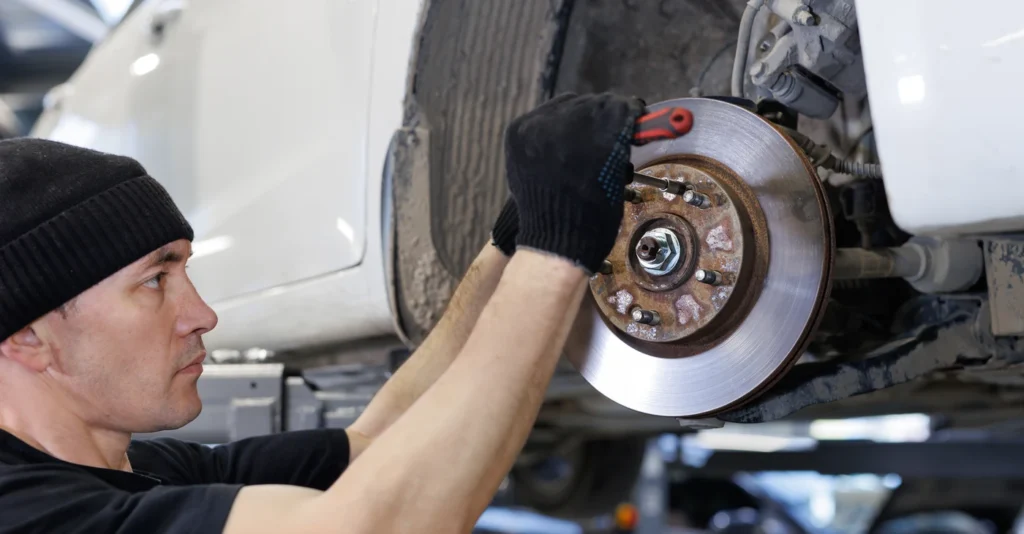
When drivers ask how long do brakes last, the answer can vary depending on driving habits, vehicle type, and road conditions. In general, most brake pads last between 30,000 and 70,000 miles, according to automotive experts such as the American Automobile Association (AAA) and other industry sources.
Interestingly, your front brakes typically handle about 60–70% of the vehicle’s stopping power, which means they often wear out faster than the rear brakes. If you notice warning signs like squeaking, grinding, or longer stopping distances, it may be time to visit a trusted shop.
If you’re searching for brake repair Houston, visit Eric’s Car Care, your trusted auto repair Houston shop.
Key Brake Components That Affect Brake Lifespan
To understand how long brakes last on a car, it helps to know the main components of the braking system and how each one wears over time. Parts like the brake pads, rotors, and calipers work together to slow and stop your vehicle, but they do not wear out at the same rate. Their lifespan depends on factors such as driving habits, road conditions, and the quality of the parts used.
1. Brake Pads
Brake pads are the parts that create friction to slow the vehicle. When you press the brake pedal, the pads press against the rotor to reduce the wheel’s speed. Because they directly create friction, they wear out faster than most other brake components. On average, brake pads last 30,000 to 70,000 miles, as we discussed earlier.
2. Brake Rotors
Brake rotors are the metal discs attached to the wheels. When the brake pads press against them, friction is created to slow the car down. Rotors are built to be durable, so they typically last 50,000 to 70,000 miles, and sometimes longer if they are properly maintained. However, excessive heat, worn brake pads, or uneven braking can cause rotors to warp or wear down, requiring resurfacing or replacement.
3. Brake Calipers
Brake calipers are the components that hold the brake pads and press them against the rotor using hydraulic pressure from the brake system. Unlike pads and rotors, calipers usually last much longer because they do not experience the same level of friction. In many vehicles, brake calipers can last 75,000 to 100,000 miles or more, and sometimes even the lifetime of the car if they are properly maintained.
If you want to have your vehicle inspected by a professional. Searching for auto repair near me can help you find a trusted auto repair shop in your area, like Eric’s Car Care, including reliable brake repair services in Houston that keep your vehicle safe and road-ready.
Key Factors That Affect Brake Lifespan
Several factors can influence brake pad longevity and the overall brake lifespan of your vehicle. While brake components are designed to be durable, the way you drive and maintain your car plays a major role in how long they actually last.
- Driving Habits: Your driving style is one of the biggest factors affecting brake lifespan. Frequent hard braking, sudden stops, and aggressive driving create more friction and heat, which wear down brake pads faster. Smooth and gradual braking can significantly improve brake pad longevity.
- City vs. Highway Driving: Vehicles driven mostly in city traffic experience more stop-and-go situations. This means the brakes are used much more often, reducing the overall brake lifespan. On the other hand, highway driving typically requires fewer stops, which helps brakes last longer.
- Vehicle Weight: Heavier vehicles, such as SUVs, trucks, and vehicles carrying heavy loads, put more pressure on the braking system. The extra weight requires more force to stop the car, which can reduce brake pad longevity and lead to faster brake wear.
- Brake Pad Material: Different brake pad materials have different durability levels. Ceramic brake pads usually last longer and produce less dust, while organic pads may wear out faster.
- Maintenance and Inspections: Regular brake inspections and timely replacements help maintain a healthy braking system. Ignoring worn brake pads can damage rotors and other components, shortening the overall brake lifespan and leading to more expensive repairs.
Signs Your Brakes Need Replacement
Knowing the warning signs of worn brakes can help you determine the right brake pad change time and prevent damage to other braking components. Since brake pads wear down gradually, your vehicle usually gives several warning signals before they completely fail.
- Squeaking Noises: A high-pitched sound when braking often indicates that the brake pads are wearing down, as built-in wear indicators alert drivers that the pads are getting thin.
- Grinding Sound: Grinding noises usually mean the brake pads are completely worn out, and the metal backing plate is contacting the rotor, which can quickly damage other brake components.
- Reduced Braking Performance: If your vehicle takes longer to stop or the brake pedal feels less responsive, it may indicate that the brake pads are worn and need attention.
- Brake Pedal Vibration: A vibrating or pulsating brake pedal can signal unevenly worn brake pads or warped rotors that require inspection.
- Thin Brake Pads: If the brake pad material is less than 3 mm thick, most mechanics recommend replacing it to maintain safe braking performance.
- Brake Warning Light: If the brake system warning light appears on your dashboard, it may indicate a problem with the braking system that should be checked by a professional.
Get Professional Brake Repair Houston Services
Understanding how long brakes last and recognizing early warning signs can help you avoid costly repairs and keep your vehicle safe on the road. At Eric’s Car Care, we make it easy to take the next step when you notice unusual brake noises or reduced stopping performance. If you’re searching for brake repair near me, our experienced team in Houston is ready to help with reliable, professional service.